 Cape Town City Guide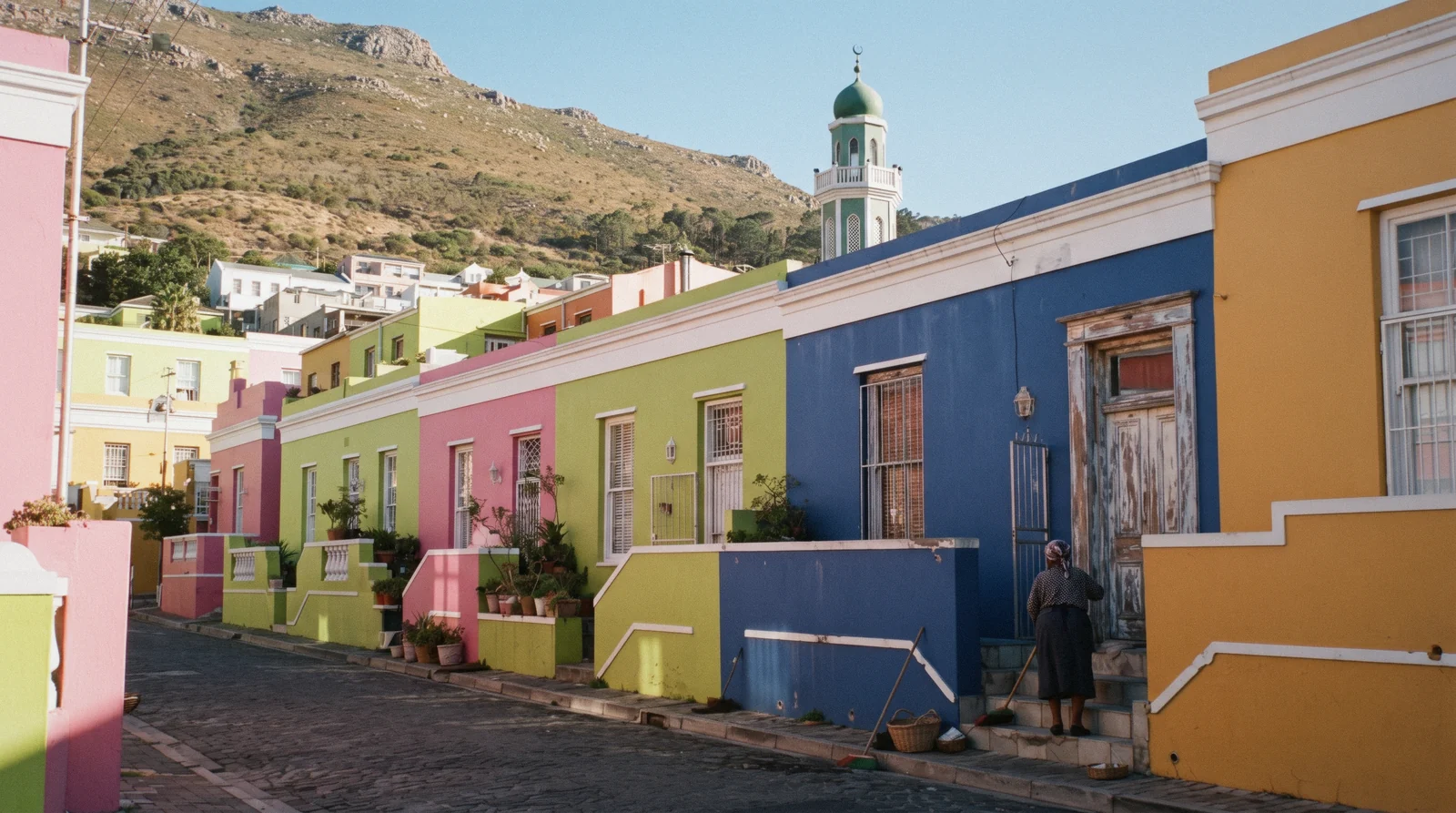
Bo-Kaap, Cape Town
Bo-Kaap is the painted quarter on Signal Hill's lower slope and the historic heart of Cape Town's Muslim community - a living neighbourhood of about 3,200 people, not an open-air museum. This page covers the streets and how to walk them respectfully, the Bo-Kaap Museum's verified hours and tariff, Auwal Mosque, the koesister tradition and the guided walks compared - one entity page of things to do in Cape Town, with every figure carrying its source and date.
Quick answer What it is, what it costs, how to visit respectfully
Bo-Kaap is a living, mostly Muslim neighbourhood on the lower slope of Signal Hill, not an open-air attraction: about 3,200 people live behind the painted facades. Walking the streets is free and takes under an hour; the Bo-Kaap Museum at 71 Wale Street charges R100 for international visitors ($6.21) and R60 for South Africans, Monday to Saturday 09:00-17:00. The single best decision is to go with a resident-led guide rather than pose against someone's front door.
Key takeaways
- The two-hour Bo-Kaap walking tour is listed at $40.49, rated 4.8 from 345 reviews, and turns a ten-minute photo stop into the story of the oldest Muslim community in South Africa - it is the option we would book.
- The museum is a nineteenth-century Muslim household preserved in a house built in 1768; the ticket table has every tariff row, and Fridays are free for SA students and pensioners.
- A township tour is a different thing in a different place - Langa and Khayelitsha, not Bo-Kaap - and the half-day township tour is compared further down. How the quarter fits the rest of the centre is on the City Bowl page.
Key facts
Opening hours
| The streets | always–open |
|---|---|
| Bo-Kaap Museum, Monday-Saturday | 09:00–17:00 |
Closed Museum: Sundays, Christmas Day, Workers' Day, 1-2 January
Admission
- Adult
- Streets free; museum $6.21 (R100) international adult on the Iziko tariff effective 1 April 2026
- Reduced
- $3.73 (R60) SA adult; $2.49 (R40) SA child 5-17 and SA students/pensioners with cards
- Free
- SA students and pensioners with valid cards on Fridays; under-5s
Planning it
- Time needed
- 1-2 hours for the streets and the museum; 2 hours with a guided walk
- Book ahead
- Optional — walk-up usually fine
- Address
- Between Buitengracht Street and Signal Hill; the museum is at 71 Wale Street
Bo-Kaap Museum tickets and the guided walks, compared
The streets are free, so the only ticket here is the museum - official tariff on iziko.org.za, in force from 1 April 2026 - plus the guided options that include Bo-Kaap on foot. Dollar figures at R1,000 = $62.13.
Are you paying to go inside a museum, or to have the streets explained? Bo-Kaap's colour is free; only the museum has a door.
| Option | Price | Time | What you get | Book |
|---|---|---|---|---|
| Bo-Kaap Museum, official (Iziko)The one paid door in the quarter, and 30–45 minutes is genuinely enough | $6.21 (R100) international adult; $3.73 (R60) SA adult; $2.49 (R40) SA child 5-17 | 30-45 minutes | The 1768 house at 71 Wale Street furnished as a nineteenth-century Cape Muslim home; pay at the door, no booking needed | Official site |
| Bo-Kaap and city highlights walking tourA first morning in the city, with the Bo-Kaap and the CBD joined up | $40.49 | 2 hours | Guided walk through the quarter and the adjoining centre with a snack; museum entry not included | Check Availability |
| Art, culture and history walking tourStreet art and the civic quarter rather than the painted houses alone | $37.38 | 2 hours | The centre's history on foot with a Bo-Kaap leg; entry fees excluded | Check Availability |
| Half-day township tour (Langa, Khayelitsha)Langa and Khayelitsha, with the vehicle and the context you cannot improvise | $55.45 | 3-4 hours | A different subject in a different place - apartheid-era townships, not Bo-Kaap; vehicle, guide and entrance fees included | Check Availability |
| Langa township walking tour with a resident guideLanga on foot with a resident guide — the version this guide would take | $31.15 | 2.5 hours | On foot through Langa, Cape Town's oldest township, led by someone who lives there | Check Availability |
The official museum row carries no booking fee and no affiliate link. The two township rows are in this table because visitors ask for them together; the section below explains why they are not the same visit.
The guided ways in
Two walking tours that cover the quarter itself and two township tours that answer a different question. Prices and ratings as listed on GetYourGuide.
 from $40.49
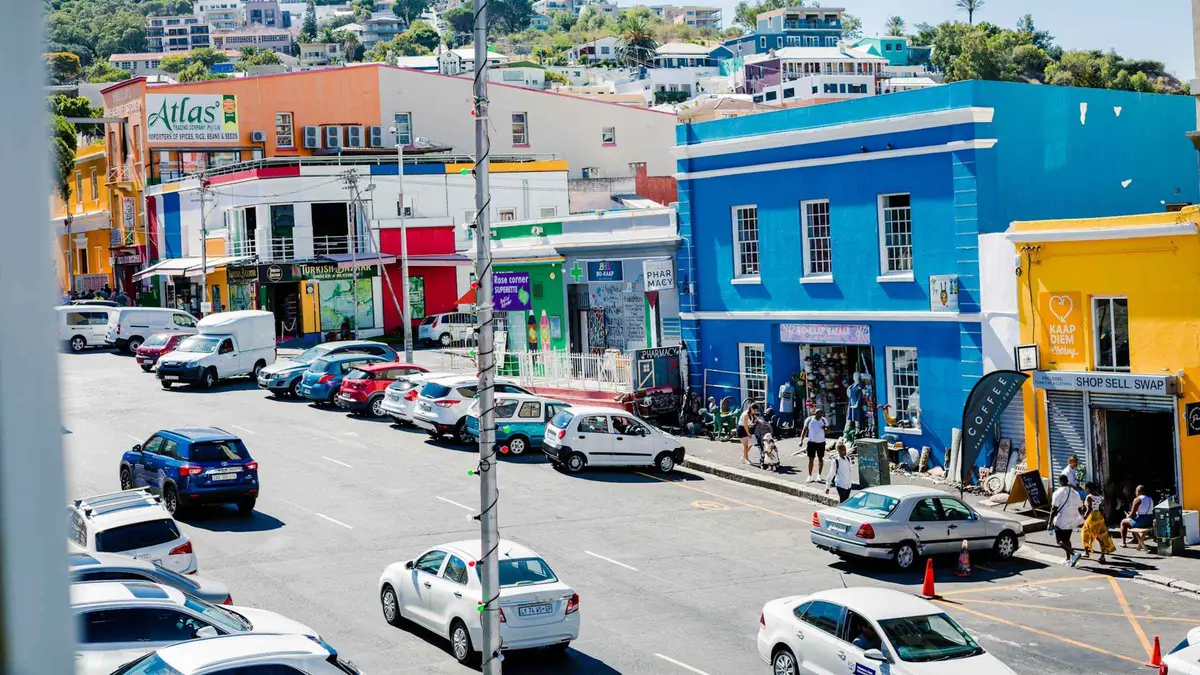
Cape Town Walking Tour: Bo-Kaap & City Highlights
2-hour guided walk through Bo-Kaap and the city landmarks with a snack thrown in, offered in four languages including Xhosa and Afrikaans. Entry fees to any paid sites are your own.
Check Availability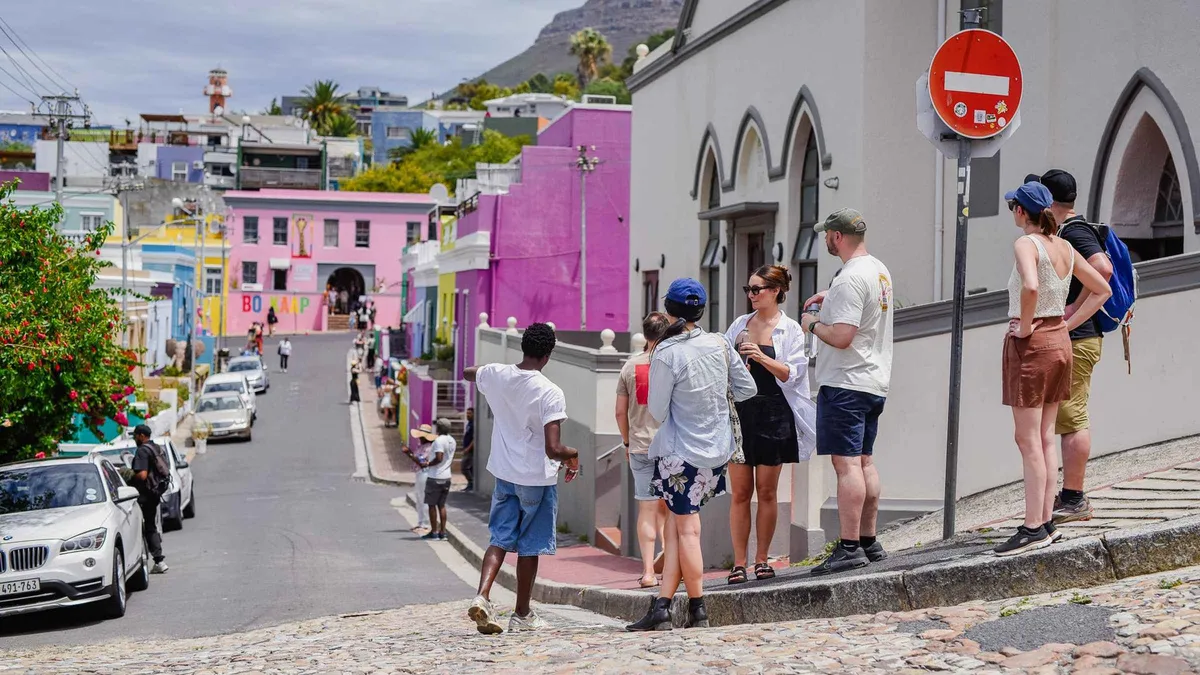 from $37.38
Cape Town: Art, Culture & History Walking Tour
Street art, history and Bo-Kaap in a 2-hour walk from the Bo-Kaap Deli — slightly cheaper than the rival walk but English-only and no snack. Wear comfortable shoes and bring water.
Check Availability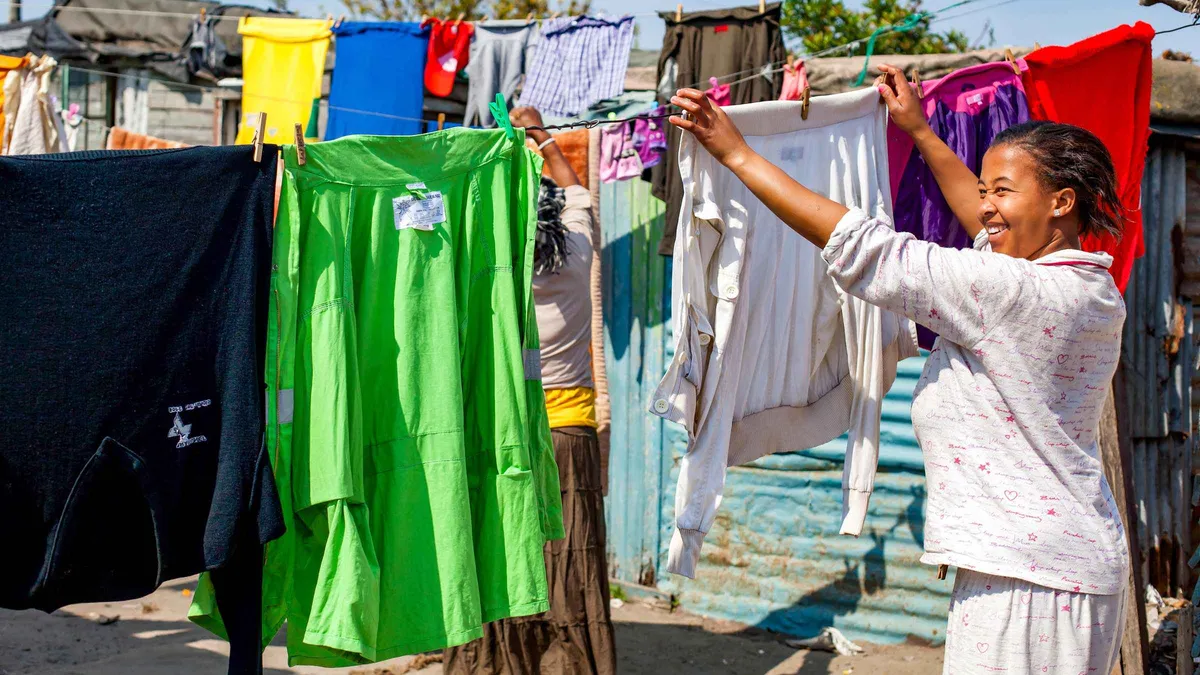 from $55.45
Half-Day Tour Through Cape Town's Townships
3-4 hour township visit with pickup, entrance fees and insurance in the price — rare on this page. Some venues close at weekends, and the tour needs a minimum of two guests. Bring small change for photo donations and crafts.
Check Availability from $31.15
Cape Town: Nathi Langa Township Walking Tour
2.5-hour walk through Langa, Cape Town's oldest township, led by a resident guide in English or Xhosa — the cheapest and most direct township option, but you get yourself there and back.
Check AvailabilityPrices, ratings and details are the platform's own. Dollar figures are the listed prices. The platform bills in your account's currency.
What Bo-Kaap is, and why the houses are painted
A neighbourhood first, an attraction second
Bo-Kaap - "above the Cape" in Afrikaans - climbs the lower slope of Signal Hill between Buitengracht Street and the Noon Gun, a grid of small flat-roofed houses in saturated greens, pinks, blues and yellows. It is the historic heart of Cape Town's Muslim community: at the last census that published the figure, about 3,200 people lived here in under a square kilometre, and a majority of them identified as Muslim. The call to prayer carries across the quarter five times a day, children walk to the madrassah in the afternoon, and the front steps that appear in a thousand photographs are the entrances to family homes.
That is the fact that should organise a visit. The streets are public and nobody minds visitors walking them - tourism is part of the quarter's economy - but the difference between photographing a street and photographing someone's doorstep is the difference this page keeps returning to.
From rental whitewash to colour
The land was laid out from 1760, when Jan de Waal bought a block at the foot of Signal Hill and built small rental houses. The people who filled the quarter were largely enslaved and free Muslims brought by the Dutch East India Company from present-day Indonesia, Malaysia, India and East Africa - the community South Africans call Cape Malay. While the houses were leased they had to stay white; the story residents tell, and the one reported in most histories, is that colour arrived as an expression of ownership and freedom. Honesty requires one footnote: photographic evidence suggests the bright palette as it exists today spread in the late twentieth century rather than the nineteenth. The colours are real, the community is old; the two facts have different ages.
The quarter survived the apartheid era that levelled District Six a kilometre away - Bo-Kaap was zoned for Muslim residents under the Group Areas Act rather than demolished - which is why it is the one historic working-class neighbourhood of central Cape Town still standing and still lived in by the community that built it.
Protected on paper since 2019
In March 2019 the city approved Bo-Kaap's inclusion in a Heritage Protection Overlay Zone covering roughly 600 privately owned homes, and in May 2019 nineteen individual sites in the quarter were declared National Heritage Sites. The protections followed years of resident campaigns against high-rise development on the quarter's edge. Rising prices and short-let conversions remain a live argument here - worth knowing, because it explains why some residents are warm to visitors and others are tired of them.
Photography etiquette: the five habits that matter
None of this is regulation - there is no permit, no fee, no signage. It is what resident guides ask of their own groups, and it costs nothing.
Photograph houses, not households: the facades are the subject, and shooting them from across the street rather than from the doorstep keeps a lens out of someone's front window. Ask before photographing people - a request in plain English, answered with a smile or a no, either of which settles it. Do not sit, lean or pose on steps and stoops; they are private property and the most common complaint residents raise. Keep voices down in the early morning and around prayer times, and step aside for residents on the narrow pavements - the streets are their commute, not a set. Finally, spend something where you can: the corner shops and home kitchens selling koesisters keep tourism's value inside the quarter.
A guided walk builds all five habits in by default, which is the practical argument for the resident-led walking tour beyond the history you get with it.
The Bo-Kaap Museum at 71 Wale Street
Figures below read from the museum's own page on iziko.org.za; the tariff is the flat Iziko rate in force from 1 April 2026.
The museum occupies one of the oldest houses in the quarter - the building dates back to 1768 - and has been a museum since 1978, furnished to show the household of a nineteenth-century Cape Muslim family: the front room set for visitors, the bridal chamber, the kitchen with its copper and coal stove. It was declared a National Monument in 1965 and restored in the 1970s. It is small; thirty to forty-five minutes covers it, and its value is context - the rooms explain the community whose streets you have just walked.
Hours are Monday to Saturday 09:00-17:00 (Saturdays 08:30-16:00 in the winter timetable), closed Sundays, Christmas Day, Workers' Day and 1-2 January. Pay at the door - no timed slots, no booking. The tariff below is Iziko's flat rate, and the same card covers its other city museums, including the Slave Lodge, which pairs naturally with this one for the longer version of the story.
| Ticket | Entry | Notes |
|---|---|---|
| International visitors, every category | $6.21 (R100) | One flat rate - no concessions |
| South African adults | $3.73 (R60) | Same tariff across Iziko's city museums |
| SA children aged 5-17 | $2.49 (R40) | Pay at the door |
| SA pensioners and students with valid cards | R40 | Enter free on Fridays |
Auwal Mosque and the sacred geography of the quarter
Auwal Mosque on Dorp Street, founded in 1794, is the oldest mosque in South Africa. It was established in the household tradition of Tuan Guru, the Tidore prince and Islamic scholar imprisoned on Robben Island by the Dutch, who wrote out the Qur'an from memory during his imprisonment and led the congregation here after his release. The mosque still serves its neighbourhood; it is a working place of worship, not a ticketed sight, and it publishes no visiting hours or entry fee - so we print none.
Non-Muslim visitors are generally welcomed outside prayer times when someone is available to receive them - a guided walk is the reliable way to see the interior, since the guides know the caretakers and the times. Dress modestly (covered shoulders and knees; women will be offered a scarf), shoes off at the door. There are several more mosques within a few blocks - the quarter's skyline of minarets against Signal Hill is part of what the 2019 heritage protections exist to keep. The Noon Gun fires from Lion Battery on the hill directly above at 12:00 Monday to Saturday; the bang startles the whole quarter and is covered on the Signal Hill page.
Koesisters, and what to eat where you stand
The koesister is Bo-Kaap's pastry: a spiced, syrup-soaked doughnut rolled in desiccated coconut, softer and rounder than the plaited Afrikaans koeksister it is usually confused with, flavoured with cardamom, ginger, aniseed and dried orange peel. Sunday morning is its traditional slot - home kitchens in the quarter sell them from front doors and corner shops, and following the smell of frying dough down Wale or Chiappini Street on a Sunday is a better plan than any address we could print. No register or citable list ranks the sellers, so we name none; the honest advice is to buy where residents are queuing.
Cape Malay cooking more broadly - bobotie, denningvleis, chicken curry with roti - is the quarter's larger gift to the city. Several Bo-Kaap households run cooking workshops, and the food-focused tours on the where-to-eat page include Cape Malay stops; the essential food and drink tour is listed at $141.73 with over ten tastings if you want the eating version of the city's history in one afternoon.
Bo-Kaap walks and township tours are different things
Search results and tour platforms blur them together, so this page separates them. A Bo-Kaap walking tour - like the 4.8-rated two-hour walk - stays in this quarter and tells the story of the Cape Malay community: slavery under the Dutch East India Company, Islam at the Cape, emancipation, the Group Areas Act and survival. A township tour goes somewhere else entirely: Langa (Cape Town's oldest township, established 1927) or Khayelitsha on the Cape Flats, communities created by apartheid's forced removals, a 15-to-30-minute drive from the centre.
Both are worth doing and neither substitutes for the other. If you take one, take it with a guide who lives there - the Langa walking tour is led by a resident and rated 4.9 from 643 reviews, and the half-day vehicle-based township tour includes entrance fees and covers more ground. What they share with Bo-Kaap is the same rule: these are neighbourhoods where people live, and the guide is what turns presence into a visit.
Getting there, and the after-dark question
On foot from the centre
Bo-Kaap starts one block uphill from Buitengracht Street: from Greenmarket Square it is about 600 metres and ten minutes gently uphill along Wale Street, and the painted core - Chiappini, Rose and Wale Streets - sits within the first three blocks. The hop-on hop-off bus and the walking tours all reach it from the centre; there is no reason to drive, and the narrow one-way streets punish anyone who tries in December. From De Waterkant, the restored quarter on the other side of the same hillside, Rose Street connects the two in five minutes - the pairing makes a natural morning.
Daylight is the visit
Every practical question about safety here has the same answer: come in daylight, which is when everything you came for is open and lit anyway. The quarter is residential and quiet after dark, with little for a visitor to do and empty streets on the walk back to town - the general Cape Town habits apply, which are covered honestly on the safety page: walk with purpose, keep the phone pocketed, and take an e-hail rather than a dark walk. Morning light is the photographer's answer too - the east-facing facades take the sun before 10:00, and the tour groups arrive after it.
Bo-Kaap on the map
Red pins are the quarter's own sights; teal pins are the approaches from the centre. The painted core is the three blocks of Chiappini, Rose and Wale Streets closest to Buitengracht.
Next door to the painted streets
De Waterkant
The cobbled, boutique-filled quarter on the other side of the slope - same historic fabric, very different present. The distinction matters and the De Waterkant page explains it.
5 minutes via Rose StreetThe City Bowl's museum mile
The Slave Lodge, Company's Garden and the rest of the centre's sights, with hours and prices, on the City Bowl page.
10 minutes downhillSignal Hill and the Noon Gun
The hill above the quarter: the 12:00 gun, the sunset viewpoint and the paragliding launch, on the Signal Hill page.
The slope directly aboveBo-Kaap: questions
Why are the houses in Bo-Kaap so colourful?
The account residents give is that colour arrived with ownership: while the houses were rented out under the Dutch and British they had to stay white, and painting them brightly became an expression of freedom and identity. The honest footnote is that the palette as it looks today appears to have spread in the late twentieth century - the community is centuries old, the current colours are younger.
Is Bo-Kaap worth visiting?
Yes, and it takes little to do well: the painted core is three blocks, the museum is 30-45 minutes and R100 ($6.21) for international visitors, and the two-hour guided walk adds the history that the facades alone cannot tell. It is the one central Cape Town neighbourhood where the pre-apartheid working-class city survives intact.
Can you walk from Bo-Kaap to the V&A Waterfront?
Yes - roughly 2 km and about 25-30 minutes: down through De Waterkant via Rose and Waterkant Streets, then across to the harbour. In daylight it is a pleasant walk; after dark take an e-hail instead.
Is it OK to take photos in Bo-Kaap?
Of the streets and facades, yes - that is part of the quarter's economy. Of people, only with permission; and stay off private steps and stoops, which is the complaint residents raise most. There is no permit or fee - the rules are courtesy, not regulation.
What are the Bo-Kaap Museum's hours and prices?
Monday to Saturday 09:00-17:00 (winter Saturdays 08:30-16:00), closed Sundays, Christmas Day, Workers' Day and 1-2 January. International visitors pay R100 ($6.21) flat; SA adults R60, children 5-17 and SA students/pensioners R40, with free entry for those cardholders on Fridays. Tickets at the door - per iziko.org.za.
Is Bo-Kaap safe to walk around?
In daylight, with ordinary city habits, yes - it is a residential quarter with people about and tour groups moving through all morning. After dark it is quiet and empty rather than welcoming, so do the visit in daylight and use an e-hail at night, the same advice that applies across the centre and is set out on the safety page.
Bo-Kaap on Video
Three views of the quarter: a walking tour at street level, a documentary made with residents, and the tourism-pressure story told from inside it.
Bo-Kaap: The Colorful Heart of Cape Town
The painted core at walking pace - Chiappini, Rose and Wale Streets in the light this page recommends.
Video: Lets ExploreFrom the Cape: South Africa's Bo-Kaap
A documentary on the community behind the facades - the context every visitor should carry up the hill.
Video: Al Jazeera EnglishDigital nomads, tourism boom makes life hard for Bo-Kaap residents
Residents on what visitor pressure and rising rents are doing to the quarter - the reason the etiquette section exists.
Video: The Debrief NetworkVideos load from YouTube only when you press play.
Prices, hours and terms are set by the venue or operator and confirmed at checkout.
We may earn a commission if you book through one of our links, at no extra cost to you. Full affiliate disclosure