 Cape Town City Guide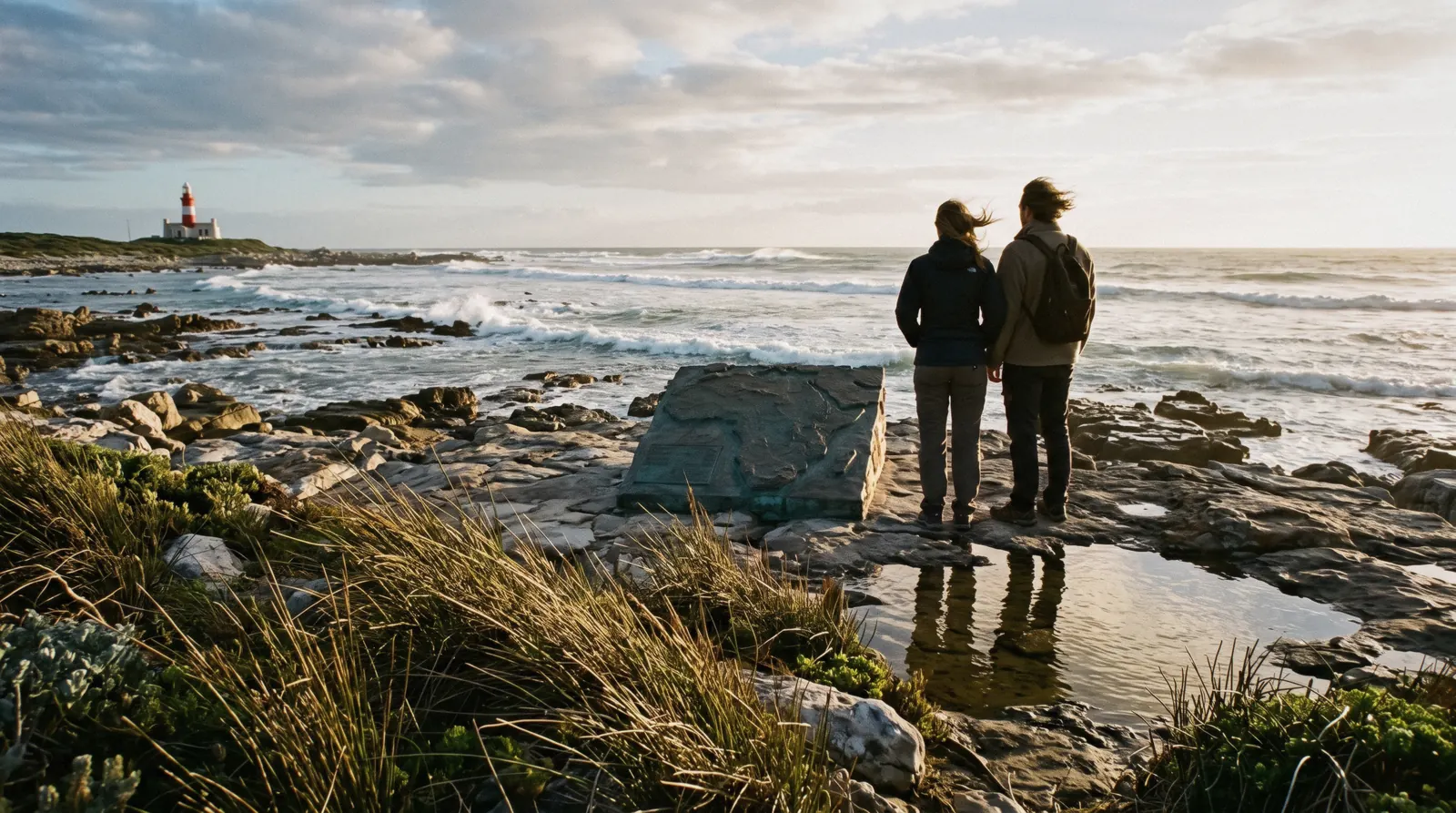
Cape Agulhas: the Actual Southernmost Point of Africa
Most visitors leave South Africa believing they stood at the bottom of Africa at Cape Point. They did not — the continent runs out about 150 km further east, at Cape Agulhas, a low, windblown, rocky shore inside a quiet national park, marked by a monument on the official dividing line between the Indian and Atlantic Oceans. This is the site's myth-busting page: what is actually at the tip, what SANParks charges to stand there, why the 1848 lighthouse is worth the R32, and the honest admission that this is a long day from Cape Town. It is part of the day trips hub of this guide to things to do in Cape Town.
Quick answer Why it's the real tip, what it costs, whether the long drive is worth it
Cape Agulhas — not Cape Point — is the southernmost point of Africa and the official meeting line of the Indian and Atlantic Oceans. Standing on it costs a $16.71 (R269) SANParks conservation fee for international adults, the 1848 lighthouse climb adds $1.99 (R32), and the honest catch is the geography: about two hours' drive from Cape Town each way, making this a committed full day for one unforgettable photograph and a quiet, moving stretch of coast.
Key takeaways
- No day tour we can verify runs here — this is a self-drive trip. If you want the southern coast without your own car, the Hermanus whale tours cover the first half of the same direction; the boat-based one was listed at $221.16.
- The two-oceans "meeting of currents" you may have been shown at Cape Point is the myth this page exists to correct — the official divide is here, at the Agulhas meridian.
- Make the long day pay: loop back through Stanford and Hermanus in whale season, or overnight in L'Agulhas and drive back through the Overberg wheatlands at leisure — the day trips hub maps both routes.
Key facts
Opening hours
| Agulhas National Park | gate hours not stated on the fetched official pages–see note |
|---|
Closed The park operates daily; lighthouse climb hours are not stated on the official pages we fetched — arrive in the middle of the day and neither gap will affect you
Admission
- Adult
- $16.71 (R269) international daily conservation fee; SADC nationals $7.64 (R123); South Africans $3.79 (R61). Lighthouse: $1.99 (R32) adults
- Reduced
- Children 2–11: $6.46 (R104) international, R61 SADC, R30 SA; lighthouse $1.03 (R16.50) for under-12s
- Free
- Nothing at the tip is free for international visitors — the "free monument" claim on many blogs predates the current fee structure; a 1% community levy is added to accommodation and activity reservations
Planning it
- Time needed
- A genuinely long day: about two hours' drive each way by southafrica.net's own routing — closer to five hours of driving round trip in practice with stops — plus 1.5–2 hours at the tip and lighthouse
- Address
- Agulhas National Park, L'Agulhas, via N2 → Caledon → R316 → Bredasdorp → R319
The myth-buster: Agulhas vs Cape Point
This is the most repeated geographic error in South African tourism, and settling it is the reason this page exists.
Cape Point and the Cape of Good Hope are spectacular — sheer cliffs, crashing swell, a funicular, baboons. They are also neither the southernmost point of Africa nor the place where two oceans officially meet. The continent's true tip is Cape Agulhas, about 150 km further east: a low rocky foreland where the land simply runs out into the sea without drama, which is precisely why the Portuguese named it for their compass needles (agulhas) rather than for hope. The International Hydrographic Organization draws the Indian–Atlantic boundary at the Agulhas meridian, and South African Tourism's own materials describe the park as the southern tip of Africa — the paperwork is unanimous.
Why does everyone believe it is Cape Point? Because Cape Point looks like the end of a continent and is 60-odd minutes from Cape Town, so a century of postcards and tour commentary did the rest. The two capes are not rivals in practice: Cape Point is the scenery day, Agulhas is the pilgrimage. What you find at the pilgrimage's end is a cairn-like monument on the shoreline with a map of Africa cast in bronze, the meridian line marked, a plain sign naming the two oceans — and usually only a handful of other people, because the drive filters out everyone who wanted a quick photo stop.
Can you see the two oceans meet?
Not as a visible line — the "seam in the sea" beloved of tour guides does not exist at Agulhas or anywhere else. Water masses mix over kilometres; the boundary is a cartographic convention, not a colour change. What you can honestly see is the symbolic line at the monument, one foot in each named ocean, and — on a rough day — the shallow Agulhas Bank doing what made this coast one of the world's great ship graveyards.
The wreck of the Meisho Maru 38, rusting on the beach a short walk west of the monument, makes the point better than any plaque.
What standing at the tip of Africa costs, from SANParks' own rendered rates page and South African Tourism's lighthouse article, both read in Q3 2026. The park is not free, whatever older blogs say.
Are you paying to stand at the southern tip, or to climb the lighthouse above it? They are two separate tickets at the same place.
| Option | Price | Includes | Rule | Book |
|---|---|---|---|---|
| Agulhas National Park daily conservation feeEveryone — this is the gate fee, and the southernmost point is not free | $16.71 (R269) intl adult | The park, the southernmost-point monument, the shore trails | The tariff year runs 1 November 2025 – 31 October 2026; card only at SANParks gates | Official site |
| Conservation fee — child 2–11Families: the child rate is under half, and the monument is the same walk | $6.46 (R104) intl | As above | SA children R30, SADC R61 | Official site |
| Cape Agulhas Lighthouse climbAnyone who wants the 1848 tower and the museum at its base as well | $1.99 (R32) adult | The 1848 tower, Africa's southernmost lighthouse, with the museum at its base | Children under 12 $1.03 (R16.50); climb hours not stated officially | Official site |
SADC-national adults pay R123. A 1% community fund levy is added to accommodation and activity reservations inside the park. No skip-the-line products exist because there is no line.
No Agulhas tour exists — here is what runs closest
A negative finding we print rather than hide: no bookable day tour from Cape Town on our books reaches Cape Agulhas, which tells you how few operators think a 5-hour round drive sells. The tours below cover the first leg of the same southern coast — Hermanus and its whales — and are the practical option for the car-less.
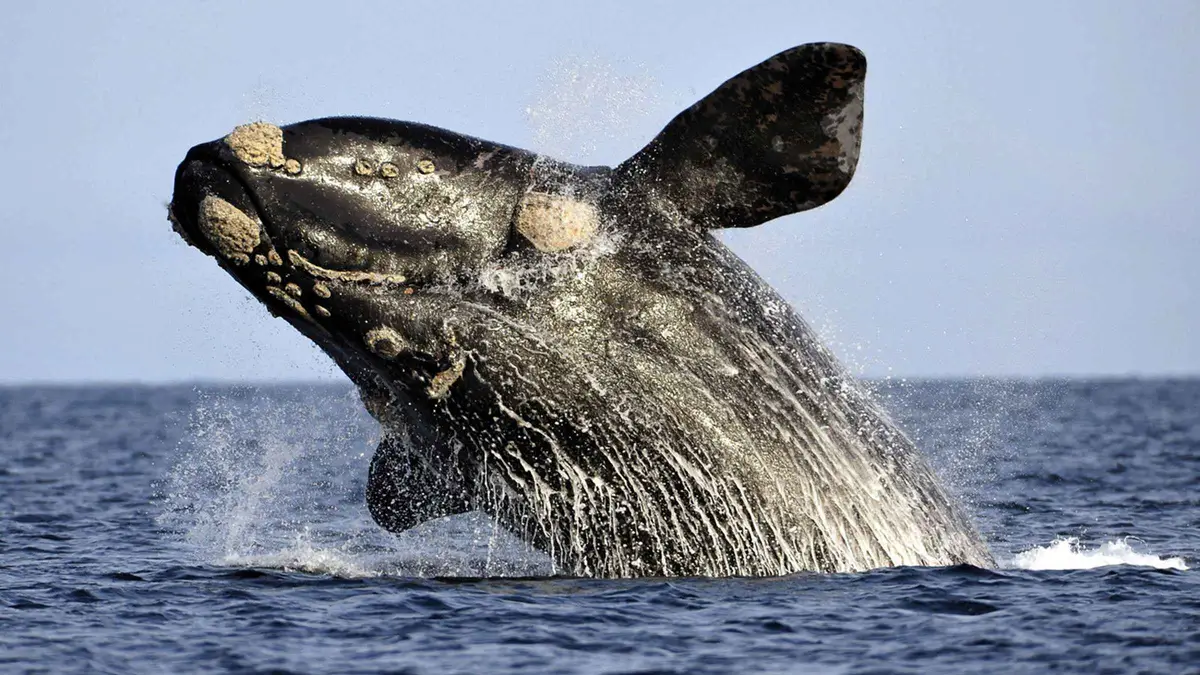 from $221.16
From Cape Town: Hermanus Whale Watching Boat Trip
Boat-based whale watching out of the Hermanus coast with Cape Town hotel transfers, drinks and snacks in the price — you're on the water, not the cliff path. Season peaks June-November.
Check Availability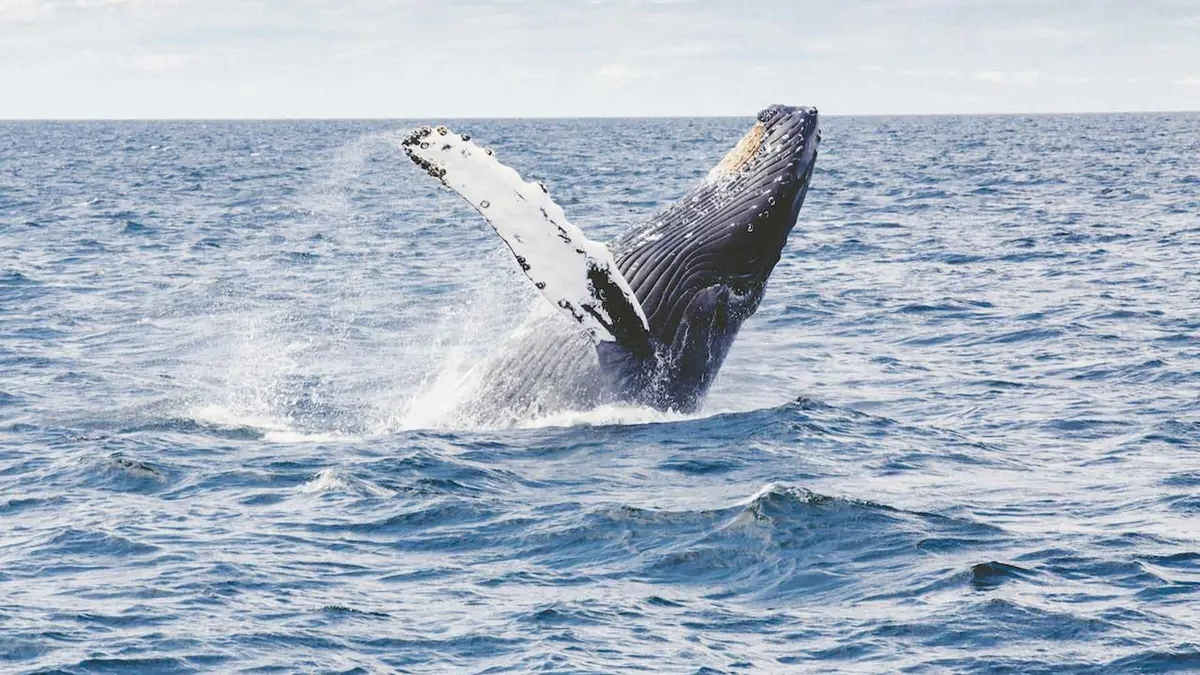 from $120
From Cape Town: Full-Day Hermanus Whale Watching Tour
Scenic day to Hermanus with a guide in four languages and Harold Porter gardens entry — but read the fine print: the whale boat is an optional extra to pre-book, otherwise you watch from shore.
Check AvailabilityPrices, ratings and details are the platform's own. Dollar figures are the listed prices. The platform bills in your account's currency.
The lighthouse: 1848 and still working
The Cape Agulhas Lighthouse is the second-oldest still-operating lighthouse in South Africa, first lit in 1848 to answer the coast's brutal wreck record — the shallow Agulhas Bank and its storms had been claiming ships since the age of sail. The local council has been responsible for its upkeep since 1971, and for $1.99 (R32) you can climb it; the ladders steepen as you rise, and the balcony view resolves the whole geography lesson below you — the low tip, the meridian, the wheatlands rolling inland.
Two honest gaps from our sourcing, printed as found: neither the climb's opening hours nor its step count appears on the official pages we fetched, so plan the climb for the middle of the day rather than the edges of it. The precinct at the base has been redeveloped in recent years — the third film in the video gallery walks through it — and holds the ticket desk and a small museum.
The monument and the shore walk
From the lighthouse a boardwalk leads about a kilometre to the southernmost-point monument — a bronze relief map of Africa at ground level, oriented so you read the continent from its end. Go at golden hour if your schedule allows; the low light across the rocks is what the photographs that sold you this trip were made of. West along the shore lies the Meisho Maru 38 wreck, and beyond it the park's coastal fynbos trails if you have walking time to spend.
Wind is the permanent weather: this shore has no shelter, and a windproof layer earns its space in the bag every month of the year.
The honest long day: getting there and making it worth it
South African Tourism's own routing and timing, plus the arithmetic no brochure prints.
The official route is N2 to Caledon, R316 to Bredasdorp, then the R319 south to L'Agulhas — about two hours' drive from Cape Town by southafrica.net's estimate, with no official kilometre figure published. Treat two hours as the optimistic floor: with a fuel stop, the Bredasdorp slowdown and the last stretch of village road, most drivers land at two and a half, which puts the round trip near five hours of driving for perhaps two hours at the tip. That ratio is the honest core of this page — Agulhas is a pilgrimage, and pilgrimages cost time.
Three ways to make the arithmetic respectable:
- The loop: go out via the N2/Bredasdorp route, return along the coast through Stanford and Hermanus — in whale season (July–November) that turns the drive home into a second attraction
- The overnight: sleep in L'Agulhas or Struisbaai, catch the monument at sunrise with nobody there, and amble back through the Overberg — the version photographers pick
- The consolidation: if the tip itself is the draw but five driving hours are not, accept Cape Point for scenery and skip Agulhas — better an honest choice than a resentful drive
Struisbaai and the stingrays
Ten minutes east of the monument, Struisbaai harbour is the natural lunch stop — a working fishing harbour with a long white beach, where short-tail stingrays famously cruise the shallows around the fishing boats. It is the right pairing for the day: unhurried, local, and a reminder that this coast's economy predates its tourism. Kassiesbaai and Arniston, twenty-odd minutes further, extend the theme if you have overnighted and own the morning.
The tip of Africa on a map
The monument, the lighthouse and the long road from Cape Town.
On the same southern roads
Agulhas anchors the far end of the Overberg; these pages cover the rest of it.
Hermanus
July to November the loop home through Hermanus adds whales to the day at zero cost — the 12 km cliff path is free. The Hermanus page has the season.
On the coastal return loopCape Point
The spectacular impostor: crowds, cliffs and a funicular an hour from town. The Cape Point page gives it its due on its own terms.
The other cape, on the peninsulaShark cage diving in Gansbaai
Gansbaai's cage-diving harbour sits between Hermanus and the Agulhas plain. The honest cage diving page explains what changed with the sharks.
Off the same N2 corridorCape Agulhas questions
Is Cape Agulhas or Cape Point the southernmost point of Africa?
Cape Agulhas, without ambiguity — it lies about 150 km further south and east than Cape Point, and the International Hydrographic Organization draws the Indian–Atlantic boundary at the Agulhas meridian. Cape Point is the more dramatic landscape; Agulhas is the geographic fact. This page's myth-buster section has the full story.
Can you see the two oceans meet at Cape Agulhas?
Not as a visible line — oceans mix over kilometres and the boundary is cartographic, not visual. What you get is the monument marking the official divide, the chance to stand with a foot on each side, and on rough days the sight of the shallow Agulhas Bank churning — the feature that wrecked over a hundred ships and got the 1848 lighthouse built.
How much does Cape Agulhas cost to visit?
The park is not free: SANParks charges international adults a $16.71 (R269) daily conservation fee (children 2–11 $6.46/R104; South Africans R61/R30; SADC R123/R61), which the official rates page shows for the tariff year to 31 October 2026. The lighthouse climb adds $1.99 (R32), under-12s $1.03 (R16.50). Gates are card-only.
How far is Cape Agulhas from Cape Town?
About two hours' drive by South African Tourism's own estimate, via N2 → Caledon → R316 → Bredasdorp → R319; no official kilometre figure is published. In practice budget closer to two and a half each way with stops — roughly five hours of driving round trip, which is why the drive section suggests the Hermanus loop or an overnight.
Is Cape Agulhas worth the long drive?
If "I stood at the end of Africa" means something to you, absolutely — the emptiness and the low shore are the point, and the monument delivers a genuine moment. If you want spectacle per hour, Cape Point wins on cliffs and convenience. The best version of Agulhas is the unhurried one: overnight nearby or loop home through Hermanus in whale season.
Can you climb the Cape Agulhas lighthouse?
Yes — $1.99 (R32) for adults, $1.03 (R16.50) for children under 12, per South African Tourism's official article. It is the second-oldest working lighthouse in South Africa, first lit in 1848, maintained by the local council since 1971. Climb hours and the step count are not stated on the official pages, so do the climb mid-day rather than betting on early or late entry.
Is there a tour from Cape Town to Cape Agulhas?
We could not verify one — no operator on our books runs a scheduled Agulhas day trip, and we print that rather than pretend. It is a self-drive destination. Car-free travellers wanting the southern coast should book a Hermanus whale tour instead, which covers the first half of the same direction with transport included.
Our verdict on the end of Africa
Cape Agulhas is the anti-attraction: no funicular, no queue, no drama — a low shore, a bronze map, a working lighthouse and the knowledge that everything on the continent is north of your feet. We think that is worth $16.71 (R269) and a long day about once per South Africa trip, and worth it most in the unhurried versions: the whale-season loop home through Hermanus, or an overnight in Struisbaai with the monument at sunrise.
What it should not be is a rushed afternoon add-on — five hours of driving resents being squeezed. If your Cape Town window is short, take Cape Point for the scenery, read this page's myth-buster so you know what you did and did not stand on, and save the true tip for the trip when you can give it a sunset. The rest of the region's options are compared on the day trips hub, and the whale coast tours are above for the car-less.
The Southern Tip on Film
Three films — SANParks' own history piece, a visitor's walk to the monument and wreck, and a look at the redeveloped lighthouse precinct.
Cape Agulhas Lighthouse: A Journey Through History | Agulhas National Park #SANParks
The park authority's own film on the 1848 lighthouse and why this coast needed it.
Video: SANParksCape Agulhas Adventure | Historic Lighthouse & Meisho Maru Wreck
A recent visitor's walk from the lighthouse to the monument and the beached wreck.
Video: MidlifeEscapesThe Southernmost Tip Reborn: Inside the New R82 million Cape Agulhas Lighthouse Precinct
The rebuilt precinct at the lighthouse base — what the arrival experience looks like now.
Video: TableandtidezaVideos load from YouTube only when you press play.
Prices, hours and terms are set by the venue or operator and confirmed at checkout.
We may earn a commission if you book through one of our links, at no extra cost to you. Full affiliate disclosure