 Cape Town City Guide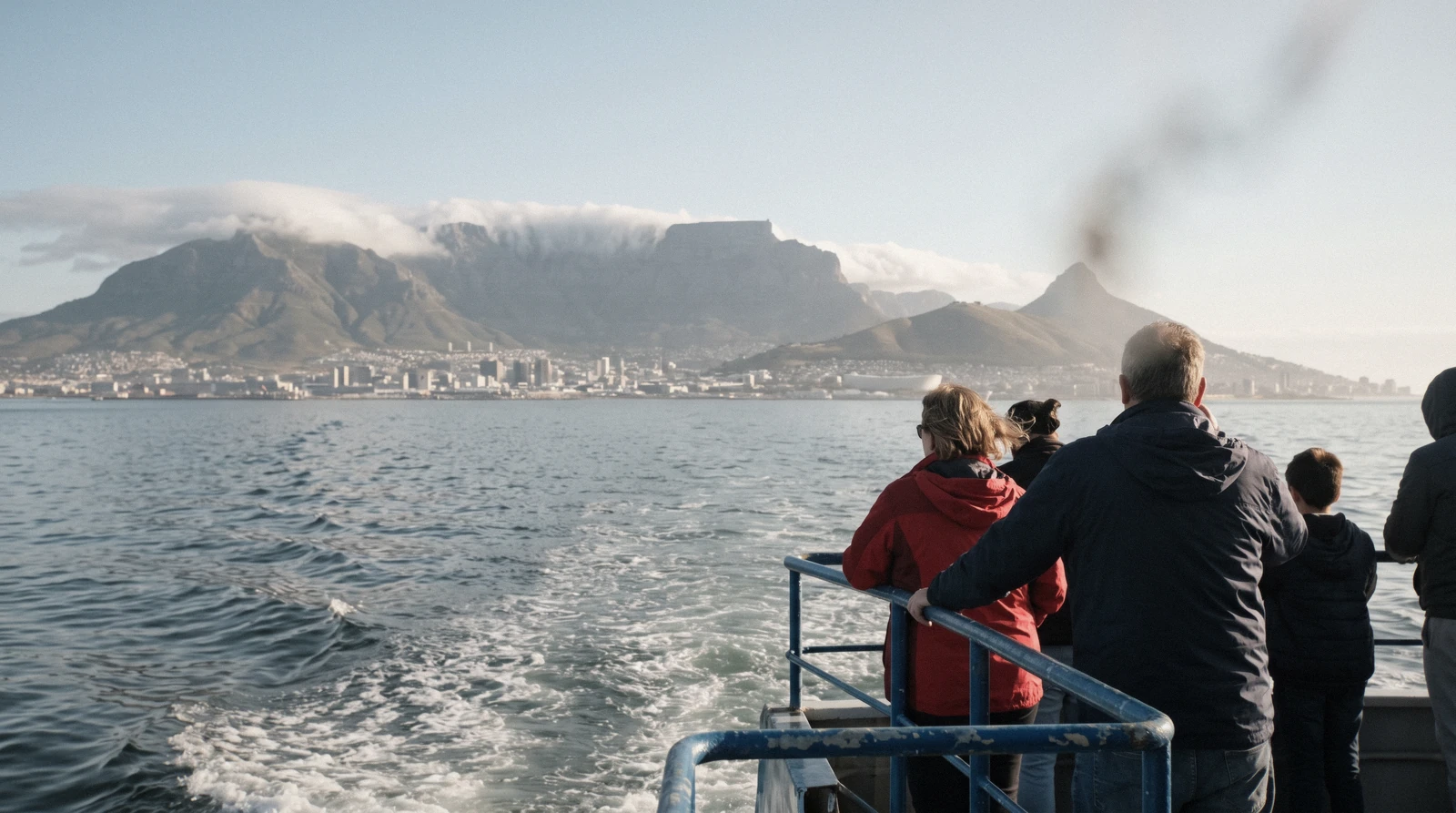
Robben Island
Robben Island is the flat, wind-scoured island in Table Bay where South Africa's apartheid government held its political prisoners, Nelson Mandela among them for 18 of his 27 years. The only way onto it is the museum's own 3.5-hour tour: ferry out, bus circuit, then the maximum-security prison with a former political prisoner as your guide. This page covers what the tour actually is, the history, the ferry times and the weather problem; prices and where to buy live on the Robben Island tickets page. The wider city plan starts from the homepage and its guide to things to do in Cape Town.
Quick answer What the tour is, when it sails, what it costs, the weather catch
Robben Island is visited only on the museum's own 3.5-hour tour: ferry from the V&A Waterfront, a bus circuit of the island, then the maximum-security prison walked with a former political prisoner. Ferries sail daily at 09:00, 11:00, 13:00 and 15:00, and swell cancellations are a normal part of this crossing.
Key takeaways
- The official portal charges international adults $37.28 (R600); the Robben Island tickets page compares it against the resale tickets and explains what happens when a sailing is cancelled
- When the portal has no seats for your date, the ferry ticket and prison tour package sells the same sailing from its own allocation with free cancellation up to 24 hours before
- Book the island for your first or second day in Cape Town, not the last: a cancelled sailing early in the trip can be rebooked, and the afternoon fits a walk through the V&A Waterfront either side of the ferry
Key facts
Opening hours
| Standard tour departures, daily | 09:00, 11:00, 13:00, 15:00 |
|---|---|
| Weekend walking tour, Friday–Sunday | 09:00–14:30 window |
Closed No fixed closing day stated; sailings are suspended for swell and ferry maintenance, announced on the museum's own channels
Admission
- Adult
- $37.28 (R600) international; South Africans pay R400
- Reduced
- Child under 18: $19.26 (R310) international; South African children R210
- Free
- None stated on the official portal
Planning it
- Time needed
- 3.5 hours including both ferry crossings; add 45 minutes for boarding
- Book ahead
- Essential — weeks ahead
- Address
- Departures: Nelson Mandela Gateway, Clock Tower Precinct, V&A Waterfront, Cape Town
The ways onto the island, priced from the official portal and GetYourGuide in Q3 2026. The full comparison with the child fares, the weekend walking tour and the refund rules lives on the Robben Island tickets page.
Are you paying for the ferry, or for a seat when the ferry is full? Every row is the same boat, the same guide and the same 3.5 hours.
| Option | Price | Includes | Cancel | Book |
|---|---|---|---|---|
| Official museum ticketEveryone who can get a date — less than half the price of any row below it | $37.28 (R600) international adult | Ferry, bus tour, prison walk | Museum rebooks or refunds cancelled sailings via its own channels | Official site |
| Ferry ticket + prison tour, 3.5 hWhen the museum portal shows no seats for your day | $81.61 | Return ferry, bus circuit, Mandela's cell | Free up to 24 hours before | Check Availability |
| Ferry ticket + guided prison tour, 4 hWhen free cancellation matters more than price — but the deadline here is three days, not one | $93.45 | Return ferry, ex-prisoner guide | Free only up to 3 days and 1 hour before | Check Availability |
| Island tour with hotel pickup, 4.5–5 hNo car, and a hotel beyond an easy walk of the Clock Tower | $80 | Transfers within 15 km, ferry, museum entry | Free up to 24 hours before | Check Availability |
| Robben Island + Table Mountain day, 8 hA single day covering both headline sights, cableway ticket excluded | $111 | Island ferry and entry; cableway ticket NOT included | Free up to 24 hours before | Check Availability |
The official ticket is less than half the resale price; buy there first. The resale rows earn their premium only when the portal is sold out for your date or when you want free cancellation — and note the odd deadline on the 4-hour package, which closes 3 days out.
Robben Island tour options compared
Every card links to the operator's page where the calendar shows which sailings still have seats. Prices are the operators' own listed figures; every one departs from or returns to the V&A Waterfront.
 from $81.61
Robben Island Ferry Ticket & Former Political Prisoner Tour
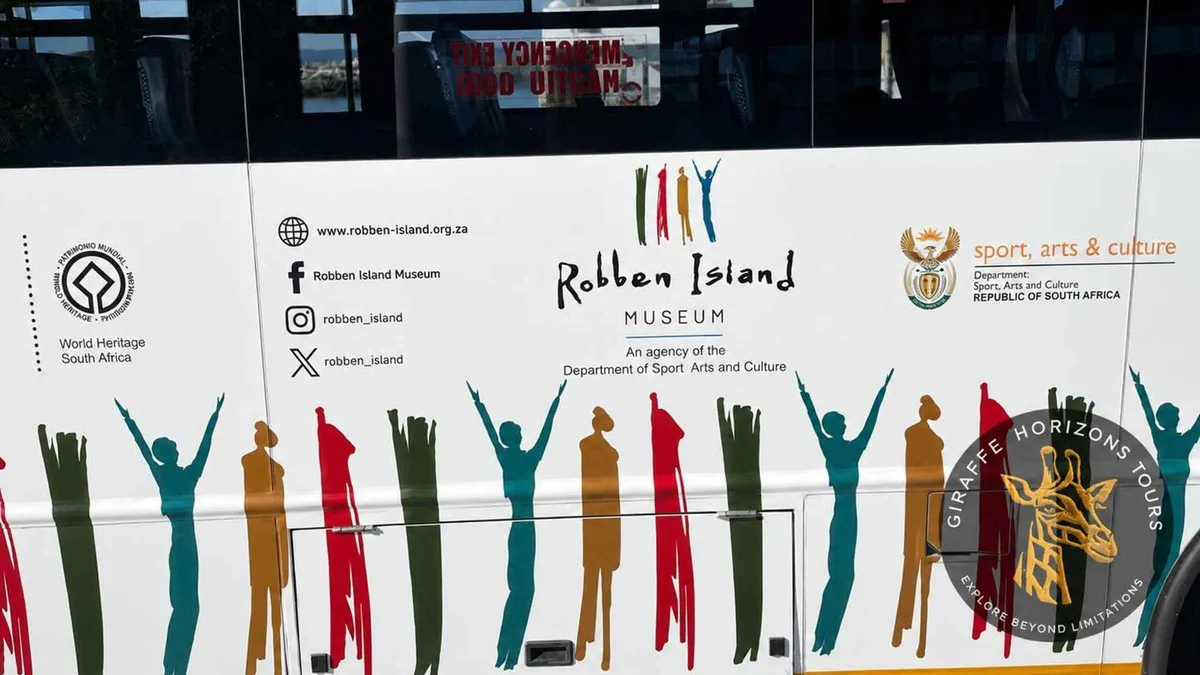
The straightforward Robben Island package: return ferry, island bus tour and the maximum-security prison with Mandela's cell, 3.5 hours. The GYG voucher is not the ferry ticket — the operator issues it against your passport details.
Check Availability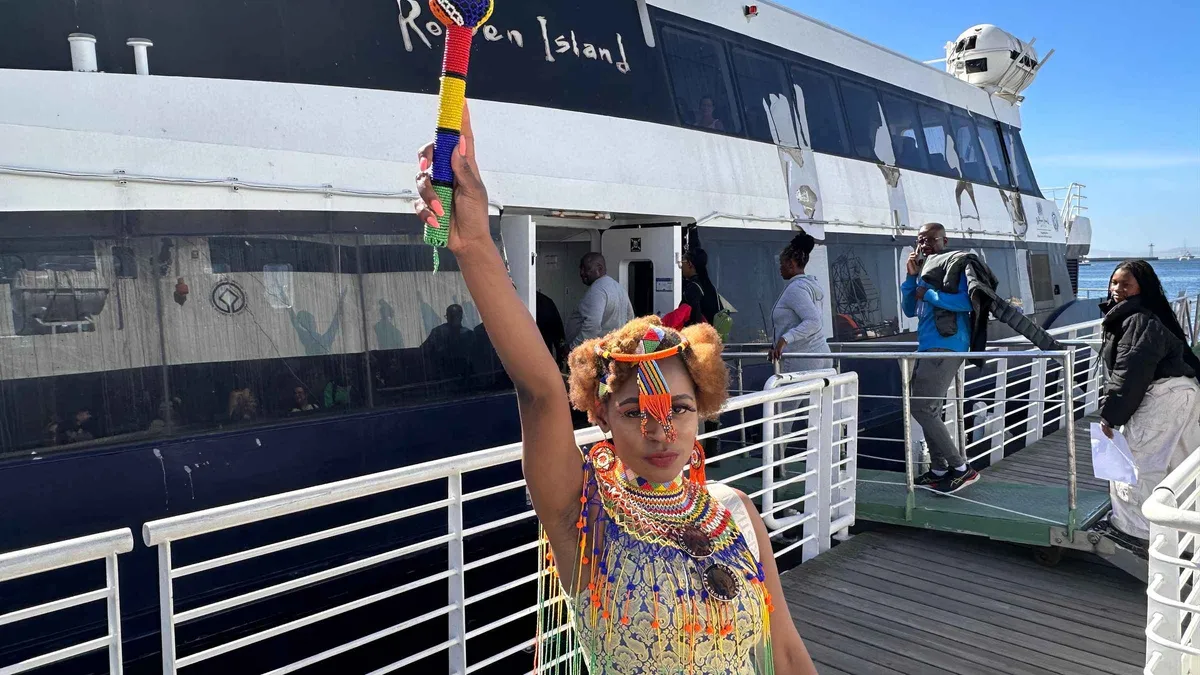 from $93.45
Cape Town: Robben Island Ferry Ticket and Guided Prison Tour
Return ferry and museum tour with a former political prisoner as prison guide; tickets arrive by WhatsApp or email. Sold to international travellers only, and cancellation closes 3 days out — earlier than most.
Check Availability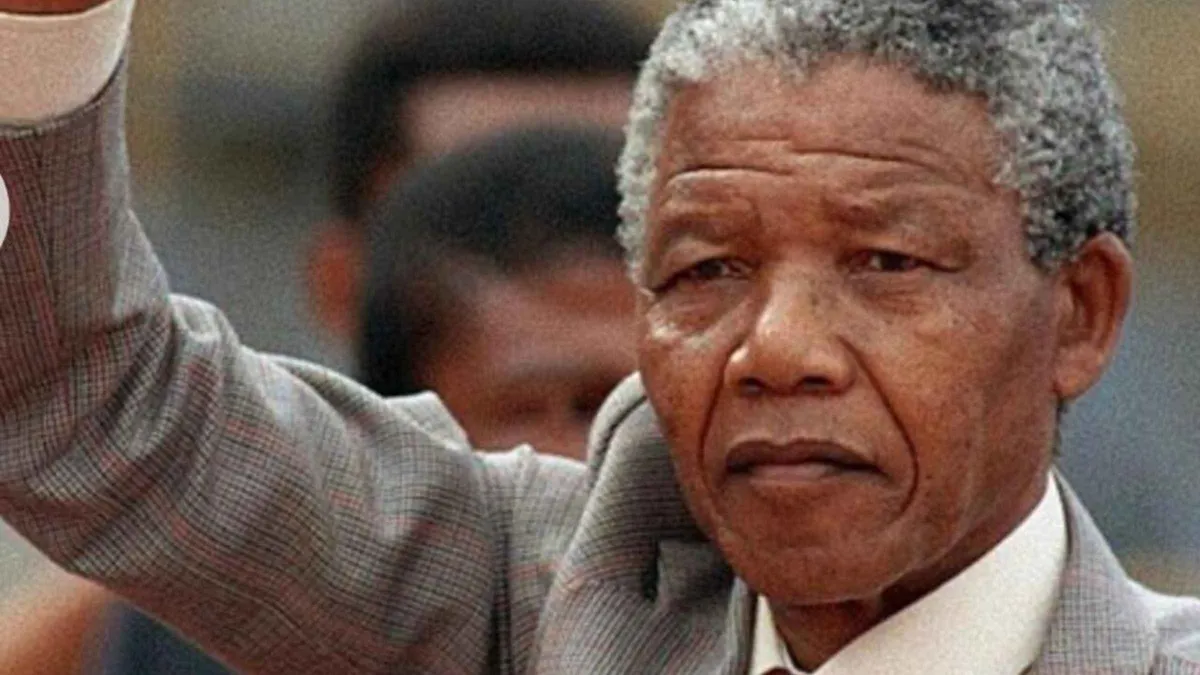 from $80
Cape Town: Robben Island Prison Tour from The V&A Waterfront
Robben Island ferry, museum entry and prison tour with hotel pickup inside 15 km of the centre, 4.5-5 hours door to door. Bring passports/IDs — all traveller names and children's birth dates are required at booking.
Check Availability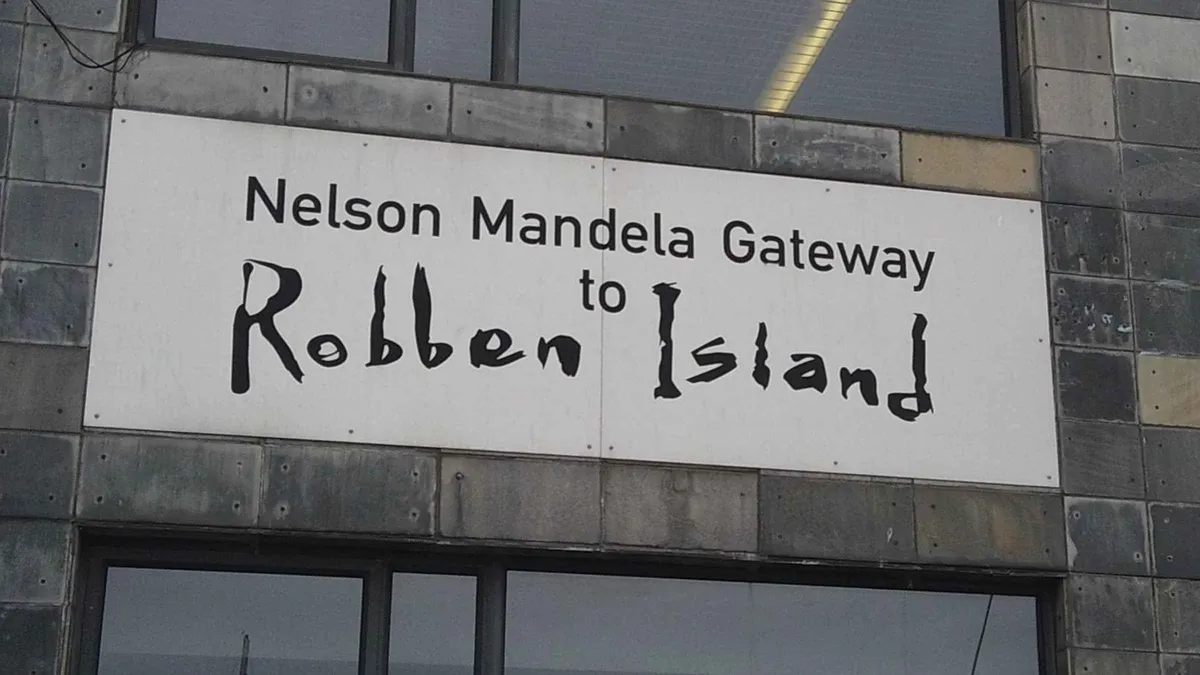 from $111
Cape Town: Table Mountain and Robben Island Tour
One 8-hour day covering Robben Island (ferry and museum included) plus Table Mountain and the aquarium — but the cableway ticket is extra at R490. Good if your time is short; bring ID.
Check AvailabilityPrices, ratings and details are the platform's own. Dollar figures are the listed prices. The platform bills in your account's currency.
What the 3.5-hour Robben Island tour actually is
You cannot land on the island independently and there is nothing to book once you are on it. One ticket buys one fixed sequence, and knowing the sequence is most of the planning.
The ferry from Nelson Mandela Gateway
Tours leave from Nelson Mandela Gateway, the museum's departure hall next to the Clock Tower at the V&A Waterfront, where the ticket barcode is scanned and boarding starts. One operator selling the same sailings tells passengers to be at the boat line 45 minutes before departure, and that is the figure to work with. The crossing runs about 7 km across open Table Bay; the museum prints the whole tour at 3.5 hours including both crossings and does not publish the crossing time alone — reckon on roughly half an hour each way in calm water, longer when the swell is up (our estimate).
The view back at Table Mountain from mid-bay is the photograph everyone takes; sit on the open upper deck if your stomach allows it, inside at the stern if it does not.
The bus circuit of the island
Off the boat, you board a museum bus for a guided circuit of the island itself: the village where warders and their families lived, the church built by lepers when the island was a colony for them, the graveyard, the World War II gun emplacements, and the house where Robert Sobukwe was held alone. The bus stops for photographs at the lime quarry and at the coastal viewpoint facing the city — the same view of Table Mountain the prisoners had, which Ahmed Kathrada called both the cruellest and most beautiful thing about the place. You do not walk the island freely; the bus is the tour.
The prison walk, led by a former political prisoner
The last stage is the one the island is visited for: the maximum-security prison, walked with a guide who was himself imprisoned here. The guides speak from memory — the cells, the censored letters, the food graded by race classification — and take questions. The walk ends at the B-Section corridor and the cell where Nelson Mandela spent most of his 18 island years: about two metres square, a felt mat and a bucket, unchanged.
Photography is allowed. The guides are the reason to choose the real tour over reading about the island; no two tell it the same way, and none of them tells it gently.
The lime quarry
The bus pauses at the lime quarry where B-Section prisoners broke stone for over a decade. The glare off the white rock damaged Mandela's eyes permanently — the reason photographers were later asked not to use flash on him. The quarry was also where prisoners taught each other in secret, from literacy through to degrees; survivors called it 'the university'.
A small cairn of stones at the entrance was begun by former prisoners at a 1995 reunion, each adding one stone.
How Much Time To Give Robben Island
There is only one product here, so the routings are not about how much of the island you see — they are about how much of your day the crossing eats. The museum prints the standard tour at 3.5 hours; its own FAQ describes it as about four hours with two half-hour ferry trips, and boarding opens well before departure.
Work from the sailing time, not the tour length. Operators selling the same departures ask passengers to be in the boarding line 45 minutes ahead, so a 09:00 sailing is a 08:15 start at the Clock Tower and a return to the Waterfront around 13:00. That is the number the three routings below are built on.
| Routing | On the island and the water | Door to door from the City Bowl | What it leaves you |
|---|---|---|---|
| The 09:00 standard tour, nothing added | 3.5–4 hours | About 5 hours with boarding and the ride to the Clock Tower | A free afternoon, and a spare slot if the sailing is cancelled |
| The tour plus the Clock Tower precinct on foot | 3.5–4 hours, then 3 more | A full day, no driving at all | Zeitz MOCAA is two minutes' walk and the V&A Waterfront surrounds you |
| A package with hotel pickup or the Table Mountain combo | 4.5–5 hours, or 8 | Half a day, or all of it | Someone else driving — but the combo does not include the cableway ticket |
One variant sits outside the table. The museum's own walking tour runs Friday to Sunday inside a 09:00–14:30 window at $87.00 (R1,400) for an international adult, and it swaps the bus circuit for the island on foot. It is a longer, slower day and a different proposition from the standard tour every listing on this page resells — the ticket comparison prices both.
Robben Island history: banishment, leprosy, apartheid's prison
The island has been a place to put people out of sight for nearly four centuries. The prison years are the reason it is a museum, but they are the last chapter, not the whole book.
Before the prison: exiles and a leper colony
The Dutch East India Company began banishing people to the island in the 1650s — political and religious leaders from its Asian colonies among them, including Muslim leaders whose exile is part of the founding story of the Bo-Kaap community. Autshumato, the Khoi interpreter banished in 1658, escaped by rowboat in 1659 and remains one of the very few people ever to get away. From 1846 to 1931 the island housed a leper colony and infirmaries; the small church the bus passes was built for the lepers, and their graveyard is still there.
During World War II the island was fortified with the coastal guns you pass on the circuit.
1961–1991: the political prison
The apartheid state opened its maximum-security prison here in 1961 and used it for Black male political prisoners until 1991. Nelson Mandela arrived in 1964 after the Rivonia Trial and spent 18 of his 27 prison years on the island before being moved to Pollsmoor in 1982. Walter Sisulu, Govan Mbeki and Ahmed Kathrada served alongside him in B-Section.
Robert Sobukwe, founder of the Pan Africanist Congress, was held apart from everyone under a law written for one man — the 'Sobukwe clause' let the state renew his detention annually after his sentence had ended, and he lived six years in the separate house the bus passes, forbidden to speak with any prisoner. The men held here did not agree with each other then — ANC, PAC and Black Consciousness prisoners argued politics across the quarry — and the museum does not pretend they did; the guides keep the arguments in the story.
- 1961: maximum-security prison opens for political prisoners
- 1963–1964: Rivonia trialists arrive; Mandela is prisoner 466/64
- 1982: Mandela moved to Pollsmoor after 18 years on the island
- 1991: last political prisoners leave; the criminal prison closes in 1996
Museum and World Heritage Site
The island became a museum in 1997 and a UNESCO World Heritage Site in 1999, listed for the way its buildings witness both suffering and 'the triumph of the human spirit'. Three men imprisoned here — Mandela, Kgalema Motlanthe and Jacob Zuma — went on to be presidents of South Africa. The museum's practice of employing former political prisoners as guides began with the first tours and continues; it is the thing visitors remember longest, and it will not last forever, which is one more reason not to postpone the trip.
Robben Island In Ten Dates
Three and a half centuries of using an island to remove people from view — livestock, exiles, patients, soldiers, prisoners — and then the twelve years in which it became the opposite.
-
1654
The Dutch put their sheep on it
Settlers of the Dutch Cape Colony move their ewes and a few rams onto the island; within the same decade the Company begins banishing political and religious leaders from its Asian colonies here.
-
1658–1659
Autshumato escapes
The Khoi interpreter Autshumato, banished in 1658, gets off the island by rowboat the following year — one of a tiny number of people ever to escape it.
-
1845
The leper colony opens
Patients are moved here from the Hemel-en-Aarde facility, and the island becomes a colony and infirmary; the small church the bus passes was built by the people held in it.
-
1892
Admission becomes compulsory
The Leprosy Repression Act makes admission mandatory and admissions jump to 338 in that year alone, against roughly 25 a year before it.
-
1931
The last patients leave
The leper colony closes after 86 years; the island's buildings pass to other uses.
-
1939–1940
A wartime garrison
Murray's Bay Harbour is built and the island is fortified for the Second World War with 9.2-inch and 6-inch coastal guns — the emplacements the bus circuit still passes.
-
1961
The maximum-security prison opens
The apartheid government begins using the island as a prison for political prisoners and convicted criminals.
-
1964–1982
Mandela's eighteen years
Nelson Mandela arrives after the Rivonia Trial and serves 18 of his 27 prison years here, in B-Section alongside Walter Sisulu, Govan Mbeki and Ahmed Kathrada, before his transfer to Pollsmoor.
-
1991, then 1996
The prisons close
The maximum-security prison closes in 1991 and the medium-security prison in 1996, ending three and a half centuries of incarceration on the island.
-
1997, then 1999
Museum, then World Heritage Site
The Department of Arts and Culture establishes Robben Island Museum in 1997; UNESCO inscribes the island as a World Heritage Site in 1999.
Sources: the Wikipedia article on Robben Island for the Dutch period, the leper colony, the wartime fortification, the prison years and the 1999 inscription; robben-island.org.za's own About Us page for the museum's 1997 establishment by the Department of Arts and Culture.
Ferry times, and why the swell decides your day
Standard tours depart daily at 09:00, 11:00, 13:00 and 15:00 from Nelson Mandela Gateway, per the museum's site. The museum states no fixed closing day; what it does instead is suspend sailings — for Atlantic swell, for wind, and periodically for ferry maintenance — announcing suspensions on its own channels, sometimes on the morning itself. This is not a rare event to be unlucky about; it is a routine feature of a 7 km open-bay crossing, and Cape Town's winter (June to August) brings the biggest swells.
The planning consequence is simple and worth stating twice: put Robben Island early in your trip. A traveller who books the island for the last morning and meets a red flag has lost it; one who booked day two rebooks for day four. The 3-day Cape Town itinerary slots the island on the first morning for exactly this reason. Morning sailings also tend to meet calmer water than the 15:00 boat on a building sea breeze (our observation, not a museum figure).
Which sailing to pick: the 09:00 pairs the island with an afternoon on Table Mountain if the cableway is running; the 11:00 is the safest all-round choice; the 13:00 and 15:00 return into the Waterfront's evening, which is no hardship.
- Daily departures: 09:00, 11:00, 13:00, 15:00 — every ticket is for one named sailing
- Board 45 minutes early; the barcode is scanned at Nelson Mandela Gateway
- Swell cancellations are routine — book the island for early in your trip (our advice)
- Cancelled sailing: rebooking and refund routes are on the tickets page
Eating On The Island, And Before You Sail
The museum answers this plainly in its own FAQ, and the answer is short: there is nothing to eat on the island beyond a shop counter, so the food question is settled before you board.
The museum's FAQ states that there are no restaurants on the island and that a small shop sells snacks and drinks. It also states that you may bring your own food and drink, with one exclusion: no alcohol. On a tour that runs three and a half to four hours with two open-bay crossings and a bus circuit with no scheduled break, a bottle of water and something to eat is not a luxury — carry them, along with the walking shoes, hat, sunglasses and sun cream the museum itself recommends, because the island is flat, exposed and windy.
The eating happens on the other side of the water. Nelson Mandela Gateway stands in the Clock Tower Precinct at the V&A Waterfront, which is where the Waterfront's restaurants, the Watershed and the food stalls all are, a signed five-minute walk from the departure hall. Take the 09:00 or 11:00 sailing and lunch afterwards there; the eating page covers what is actually worth ordering in Cape Town rather than what is nearest.
Getting to Nelson Mandela Gateway
Nelson Mandela Gateway stands in the Clock Tower Precinct on the south side of the V&A Waterfront's swing bridge, a signed 5-minute walk from the Waterfront's main shopping district and about 2 minutes from the Zeitz MOCAA silo (walking minutes are our estimates from the map). If you are staying in the City Bowl, a ride-hail to the Clock Tower is the straightforward move; the getting around Cape Town page covers the MyCiTi routes that serve the Waterfront and the hop-on hop-off bus, whose 48-hour ticket stops at the Aquarium a few minutes' walk away.
Give yourself more margin than feels necessary: Waterfront traffic bunches at midday, parking garages queue in season, and the boat will not wait. Arriving an hour before departure buys you a coffee in the Clock Tower square and a look at the small free exhibition inside the Gateway building itself, which frames the crossing you are about to make.
Take a windproof layer whatever the month — the bay is colder than the city — plus sunglasses and sunscreen for the island, which has almost no shade on the bus stops. The museum's homepage states a free cap and water bottle are included with the tour; treat that as a bonus, not a plan.
Five Things Most Visitors Do Not Know About Robben Island
Five facts from the museum's own pages and the historical record, each with where it comes from.
- The museum's own FAQ says four hours, not three and a half. The ticket page prints 3.5 hours; the FAQ describes the standard tour as "about 4 hours long with two half hour ferry trips". Budget the longer figure and add the boarding time. (robben-island.org.za, Frequently Asked Questions) - You may bring your own food and drink — but not alcohol. There is no restaurant on the island; a small shop sells snacks and drinks, and that is the entire catering.
(robben-island.org.za, Frequently Asked Questions) - Drones and tripods are banned outright, and cameras are allowed for personal use only. This is a working World Heritage Site, not a photo location. (robben-island.org.za, Frequently Asked Questions) - There is exactly one ground for a refund. The museum states it will refund tickets only for adverse weather or where the ferry is experiencing operational difficulties — which is precisely why the free-cancellation clause on a resale listing has real value here.
(robben-island.org.za, Frequently Asked Questions) - The island is smaller than the tour makes it feel. It measures about 3.3 km north to south by 1.9 km across, 5.08 square kilometres in all, lying 6.9 km off Bloubergstrand — and the whole of the bus circuit fits inside that. (Wikipedia, Robben Island) With four hours spoken for by Robben Island alone, it is worth checking how that block sits alongside the tours in Cape Town you want to fit into the same trip.
Dos And Don'ts For Robben Island
The short version of everything above, for the morning you sail.
Do
- Book on the museum's own portal first at $37.28 (R600); the platform listings resell the identical sailing for more than double — the comparison
- Take the 09:00 or 11:00 sailing on one of your first days, so a swell cancellation still has somewhere to land — where it fits
- Be in the boarding line 45 minutes before departure — the figure the operators selling these sailings give themselves — the ferry
- Carry water and something to eat; there is no restaurant on the island, only a shop counter — eating
- Wear walking shoes and take a hat, sunglasses and sun cream: the museum's own recommendation for a flat, exposed, windy island
- Stay with the ex-prisoner guide for the whole prison walk — that guide is the reason the tour exists — the walk
Don't
- Don't put the island on your last day in Cape Town; sailings are suspended for swell, wind and ferry maintenance as a matter of routine — why
- Don't bring a drone or a tripod; both are banned, and cameras are for personal use only — the rules
- Don't expect a refund for anything but weather or ferry trouble — that is the museum's stated policy, and nothing else qualifies
- Don't budget 3.5 hours and nothing more: the museum's own FAQ says about four, and boarding starts 45 minutes before that — how long to allow
- Don't book the Table Mountain combo assuming the cableway is included — it is not, and that is $29.50 (R475) on top
Robben Island map: the departure point and the island
The ferry departure at Nelson Mandela Gateway, what stands within a few minutes of it, and the island itself 7 km out in Table Bay.
Next stop from the ferry
The Gateway sits inside the V&A Waterfront, so the hours either side of a sailing take care of themselves. Walk minutes are our estimates.
Zeitz MOCAA
The contemporary African art museum in the carved grain silo, open daily to 18:00. Zeitz MOCAA is the natural pairing with a morning sailing.
2 min walkV&A Waterfront
Free to enter, open seven days. The V&A Waterfront covers the markets, the harbour cruises and where to eat before the 13:00 boat.
5 min walkTwo Oceans Aquarium
The Two Oceans Aquarium is the fallback plan when your sailing is cancelled and the children need the day saved.
6 min walkRobben Island questions
Why is Robben Island so famous?
It was apartheid South Africa's maximum-security prison for political prisoners from 1961 to 1991, and Nelson Mandela served 18 of his 27 prison years here. Three former inmates — Mandela, Kgalema Motlanthe and Jacob Zuma — later became presidents of South Africa. The island has been a UNESCO World Heritage Site since 1999, and the tours are guided by former political prisoners themselves.
How much does the Robben Island tour cost?
On the official portal an international adult pays $37.28 (R600) and a child under 18 $19.26 (R310); South Africans pay R400 and R210. Resale tickets like the ferry and prison tour package cost roughly double for the same sailing but cancel free. The Robben Island tickets page has the full grid and the weekend walking tour.
How long is the Robben Island tour?
3.5 hours door to door including both ferry crossings, per the museum. Add the 45-minute early boarding and the practical block is about four and a half hours. The tour with hotel pickup runs 4.5–5 hours with the transfers included.
Has anyone ever escaped from Robben Island?
Almost no one. The best-known success is Autshumato, the Khoi interpreter banished by the Dutch in 1658, who rowed away in 1659. During the political-prison era (1961–1991) the cold water, the currents and the 7 km of open bay did the guarding; no political prisoner escaped from the island.
What did Nelson Mandela do on Robben Island?
He served 18 years of hard labour, most of it breaking stone in the lime quarry, whose glare permanently damaged his eyes. He lived in a roughly two-metre-square cell in B-Section — the cell the prison walk ends at — studied and taught in secret with the other prisoners, and negotiated the small daily battles over food, letters and study rights that the guides describe first-hand. He was moved to Pollsmoor Prison in 1982.
Is the Robben Island tour worth it with children?
Yes for teenagers, who tend to be the most affected visitors; think twice for small children — 3.5 hours with a possibly rough crossing and an hour of prison corridors is a long ask. Children under 18 pay $19.26 (R310) on the official portal. If the sailing is cancelled, the Two Oceans Aquarium is the standard rescue.
What happens if my Robben Island ferry is cancelled?
The museum suspends sailings for swell and announces it on its own channels, sometimes the same morning; one resale operator states bad-weather cancellations are refunded in full. Rebooking is straightforward early in a trip and impossible on your last morning — which is why this page keeps saying to book the island for day one or two. The refund routes per seller are on the tickets page.
Where Robben Island fits in a Cape Town trip
Book the 09:00 or 11:00 sailing for your first full day: the morning takes the island, the afternoon absorbs the V&A Waterfront and Zeitz MOCAA without a metre of driving, and any cancellation still has the rest of the trip to land in. Pair it with Table Mountain only if you accept that both are weather-dependent and one of them may move. The 3-day itinerary builds day one this way, the 1-day plan explains what to drop if you only have one, and what to do in Cape Town ranks everything else by time needed; the rest of the city is covered in our guide to Cape Town attractions.
For the history thread, the island pairs naturally with the District Six Museum in town — the removal story on the mainland, the prison story in the bay.
Robben Island on Film: the Crossing, the Bus, the Cells
Three clips that show what the 3.5 hours look like — the ferry, the island circuit and the prison corridors — so the day holds no format surprises. The guides' own telling is the part no video replaces.
Robben Island Tour — 7 Things You Need to Know in Less Than 5 Minutes
The tour compressed to its practical facts: boarding, the bus, the prison walk and timing.
Video: The BOLD TravellerRobben Island, Cape Town! Ep 456
A full visit filmed stage by stage, from the Gateway through the quarry to Mandela's cell.
Video: DustBugs TravelRobben Island Prison — Walking Tour Introduction
The museum's own introduction to the prison walk and the former prisoners who lead it.
Video: Robben IslandVideos load from YouTube only when you press play.
Prices, hours and terms are set by the venue or operator and confirmed at checkout.
We may earn a commission if you book through one of our links, at no extra cost to you. Full affiliate disclosure