 Cape Town City Guide
Cape Town Trip Cost: What a Day Really Runs
The honest headline about any Cape Town trip cost is that for anyone paying in dollars, euros or pounds, this is one of the cheapest world-class cities on earth to be in — and one of the more expensive ones to get to. The flight is the budget; the days are not. This page builds the daily arithmetic from figures with names on them: the official gate and ticket prices held across what to see in Cape Town — cableway, Robben Island, Kirstenbosch, the museums — the published transport fares, and SARS' own VAT-refund rules. Where no official figure exists, chiefly food, the number is marked as our estimate with the reasoning shown, because nobody publishes what a plate of curry costs and we will not pretend otherwise. Every price is dollar-first at this site's stated rate of R1,000 ≈ $62.13 (European Central Bank reference, applied 2 September 2026), with the rand figure — the one your card is actually charged — beside it. One structural thing to understand before any table: South African state attractions print two prices, a South African rate and an international rate, on the same board. That is policy, not a scam, and this page always quotes you the international figure with the local one noted.
Quick answer Three real amounts, three budget bands, and the two-price system explained
On the ground, Cape Town costs less than almost any comparable city: a flat-white-and-lunch day runs about $28.00 (R450), a full sightseeing day with a major attraction about $93.20 (R1,500), and a comfortable day for two about $186.40 (R3,000) — accommodation excluded, because room rates swing too much by season for one honest number. The big single tickets are the cableway at $29.50 (R475 online) and Robben Island at $37.30 (R600); most museums cost under $16.50, and the best free things cost nothing.
Key takeaways
- The three amounts above are unpacked in the live currency panel and the daily budget bands — every sourced figure is named, every estimate is marked as one.
- The two-price system is real and legal: internationals pay $32.00 (R515) at Cape Point where South Africans pay R110 — the dual-pricing section decodes every board before you stand at one.
- Tipping is 10–15% and the VAT refund at the airport is real money on big purchases — the money-culture section covers both, and the card rules explain why you barely need cash.
- The cheapest strong bookings in the catalogue: Zeitz MOCAA fast-track at $17 and the full-day Cape Point circuit from $31 — the wider comparison lives on the tickets index.
What the Rand Is Worth Right Now
The three amounts a visitor actually handles in a day, converted at the European Central Bank reference rate — refreshed as this page loads.
R450
a flat white and a café lunch day
- USD$27.96
- EUR€24.15
- GBP£20.74
R1,500
a full sightseeing day, one big ticket included
- USD$93.2
- EUR€80.51
- GBP£69.12
R3,000
a comfortable day out for two
- USD$186.39
- EUR€161.01
- GBP£138.24
Prices across this site are converted at roughly R1,000 ≈ $62.13 and marked as approximations — the rand figure is always what your card is charged. Source: European Central Bank reference rates via api.frankfurter.dev.
Three Daily Budgets, Per Person, On the Ground
Every line is one person for one full day, accommodation excluded — Cape Town room rates swing too hard by season for one honest number. Ticket figures are official prices read in Q3 2026; food lines are our estimates and say so.
| Per person, per day | Backpacker | Mid-range | Comfort | Where the figure comes from |
|---|---|---|---|---|
| The day's big entry | $0 — the free layer | $29.50 (R475) | $37.30 (R600) | Free day from the free list; mid = cableway online rate; comfort = Robben Island international adult, both official prices |
| Second sight / museum | $3.11 (R50) | $6.21 (R100) | $16.46 (R265) | Castle of Good Hope R50; Iziko flat international rate R100 (from 1 April 2026); Zeitz MOCAA R265 — all official |
| Getting around | $8.08 (R130) | $12 (R190 range) | $21.40 (R345) | MyCiTi day pass R130 (official 2026 fares); mid = two ride-hail hops, our estimate — no official fare table exists; comfort = 1-day hop-on hop-off bus, online rate |
| Food and drink | $12.43 (R200) | $28.00 (R450) | $55.90 (R900) | Our estimates, not official figures — the arithmetic behind each is in what things cost |
| Tips | $1.24 (R20) | $3.11 (R50) | $6.21 (R100) | 10–15% on sit-down meals per the national tourism guidance, coins for car guards — see tipping |
| Day total, no bed | ≈ $24.90 (R400) | ≈ $78.60 (R1,265) | ≈ $137.30 (R2,210) | Add your room and the flights; a couple sharing pays double these lines but splits nothing — the two-price rows above are per person |
The backpacker day leans on the free layer and the R130 bus pass; the mid-range day is the realistic first-timer's day with one big ticket; comfort assumes ride-hail everywhere and a serious dinner. Big-ticket day trips break the frame entirely — a Winelands tour runs $54–$145 and shark cage diving $137+ — the day-trips hub prices those separately. The bed is excluded because rates double and halve with the season — where to stay in Cape Town weighs it honestly.
The Two-Price System, Decoded
Almost every state-run attraction in the Cape prints two or three prices for the same gate: South African, sometimes SADC (southern African neighbours), and international. It is national policy at SANParks and SANBI sites and standard at museums — subsidised access for the citizens whose taxes built the parks, full rate for visitors. The figures below are the official boards.
The gap is the point, so here it is undisguised — what you pay against what a South African pays at the same gate. Budget from the left column and treat the right as context, never as a rate you can talk your way into.
| Gate | International adult | South African adult | The multiple |
|---|---|---|---|
| Cape Point / Cape of Good Hope | $32.00 (R515) | R110 | 4.7× |
| Boulders penguin colony | $15.22 (R245) | R55 | 4.5× |
| Kirstenbosch | $16.78 (R270) | R110 | 2.5× |
| Robben Island | $37.30 (R600) | R400 | 1.5× |
| Cape Wheel | $17.09 (R275) | R180 | 1.5× |
| Iziko museums | $6.21 (R100) | R60 | 1.7× |
Three practical consequences. First, any blog quoting one "entry price" for these places is quoting somebody's price, possibly not yours — always check which column a figure comes from, including on this site, where the international rate is the headline by policy. Second, the tour-price trap: most peninsula day tours exclude the park gate fees, so the $40 tour is really $40 plus $32.00 at Cape Point plus $15.22 at Boulders — every tour card on this site says which fees ride along, because the platforms are not always loud about it.
Third, the dates: SANParks tariffs are published for a year running to 31 October 2026, so the Cape Point and Boulders figures above change on 1 November 2026; the cableway's card runs to 30 June 2027. The freshness line at the top of each attraction page tracks its own figure.
Tipping: The 10–15% That Is Actually Expected
Tipping in South Africa is real, expected, and part of how service work pays — treat it as a line in the budget, not a discretionary flourish. The national tourism authority's own guidance puts restaurant tipping at 10–20%, and notes that a 10% service charge is commonly added automatically for tables of six or more — check the bill before you add on top. In practice 10% is standard, 15% signals a genuinely good meal, and the card machine handles it: the waiter will ask "how much should I make it?" or hand you the machine to type the total, so tipping needs no cash at all.
Beyond restaurants, the everyday tips are smaller and mostly coin-shaped: a few rand to the informal car guard when you return to a street bay, R5–10 per bag for hotel porters, something for the petrol attendant who fills the tank and washes the windscreen (South Africa has no self-service pumps), and 10% or a round-up for ride-hail drivers in the app if the trip was good. Guides on day tours are customarily tipped at your discretion — the operators say so on their own pages.
One sourced data point from the top of the market that recalibrates the whole subject: La Colombe, one of the country's most awarded restaurants, prints a discretionary 13.5% service charge on its own site. If the fine-dining benchmark is 13.5% and removable, the street norm of 10–15% is exactly what it looks like — a real obligation with an honest ceiling. Where the money goes matters here more than in most places: hospitality wages lean on gratuities, and the rand you tip is worth more locally than the sixty-odd dollar-cents it costs you.
Not ideal for
- The one tipping mistake that actually causes offence is the American reflex of 20%+ delivered apologetically as if the service were charity — tip 10–15% like a local, in the machine, and everyone is comfortable.
Card-First: What To Actually Carry
Cape Town runs on tap-to-pay to a degree that surprises even Londoners. Cards — including foreign contactless cards and phone wallets — work at essentially every restaurant, café, supermarket, fuel station, attraction gate and market stall a visitor meets, and several of the biggest attractions have gone further: Kirstenbosch takes no cash at the gate at all (tickets via Webtickets or card), SANParks' gates at Boulders and Cape Point are cash-free, and the cableway prices its walk-up ticket R55 above the online one, which is a polite way of saying book online. Do not arrive with a money belt of rand; the machine is the default everywhere.
What cash is still for is precisely the tipping layer above: car guards, porters, petrol attendants, a busker on the promenade. A sensible float is $12–19 (R200–300) in coins and small notes for a week, replenished from a supermarket cashback or a bank ATM. At the ATM, two rules travel well. Use machines attached to bank branches rather than free-standing ones, and never accept help from anyone at the machine, however official they look — card-swap hustles at ATMs are a known pattern the banks themselves warn about. And when any terminal offers to charge you in your home currency instead of rand, decline it: that is dynamic currency conversion, the markup is set by the machine's operator, and paying in rand lets your own bank convert at a better rate. It is the single most expensive button in South African tourism.
The rand itself does the heavy lifting in this chapter. At R1,000 ≈ $62.13, the strong-currency visitor's arithmetic is generous everywhere except imports and flights — which is why the budget table reads the way it does, and why the right response to a Cape Town bill is quiet gratitude rather than negotiation.
Not ideal for
- The one place card-first fails is load shedding: when a power cut rolls through, some card machines drop with it. It is rare and brief in the city — the load-shedding page explains why — but it is the honest argument for the R200 float.
The VAT Refund: Real Money on Goods, Nothing on Experiences
South Africa charges 15% VAT and refunds it to foreign visitors on goods taken out of the country — the scheme is run under SARS, the revenue service, and the rules are specific enough to plan around. What qualifies: physical goods bought from VAT-registered vendors and exported within 90 days of purchase — the wine you ship home in your luggage, art, jewellery, leather. What never qualifies: everything most visitors spend most of their money on — hotel nights, restaurant meals, tours, park entries. It is a shopping refund, not a holiday refund.
The mechanics decide whether you see the money. You need original tax invoices showing the vendor's VAT number, the minimum claim is R250 of VAT-inclusive purchases in total, and — the step people miss — you must present the goods themselves with the invoices at the VAT Refund Administrator's office at the airport, before check-in for anything you intend to put in the hold. Cape Town International is one of only three airports with a VRA office, so flying home from here is the convenient case. Allow an extra half hour at the airport; the refund lands on a card.
The worked example that makes it worth the paperwork: a $310.60 (R5,000) case of Constantia wine carries roughly R652 of VAT — about $40.50 back for one queue. On a $18.64 (R300) souvenir it is under $2.50, and the queue costs more than the refund. Do the arithmetic once at the till: 15/115 of the price is the VAT inside it.
Not ideal for
- If your purchases are scattered across many small receipts, the scheme punishes you — consolidate the serious shopping into fewer, bigger, invoiced purchases, ideally at the estates and galleries themselves, and let the trinkets go unrefunded.
Where the Money Actually Goes: The Honest Splurge List
Because the daily floor is so low, a Cape Town budget is decided by a handful of big-ticket choices, not by the coffee. The day trips are the real line items: a group Winelands tour runs $54.47–$144.86 depending on depth, the Franschhoek wine tram day is $51 plus tasting fees paid estate by estate, whale watching from Hermanus lands between $120 and $221.16 depending on whether the boat is included, shark cage diving runs $137.06–$237.05, and an Aquila safari day $156.93–$236.43 — the day-trips hub compares all of them with what each price excludes. One of those every second day is what moves a trip from the mid band to the comfort band.
The other honest splurge is the top of the restaurant market, and it deserves its own arithmetic because it is the best fine-dining value on earth right now: the tasting menu at La Colombe — three stars at the 2025 Eat Out awards, the national restaurant awards — is printed at $155.00 (R2,495), with its weekday spring lunch at $105.30 (R1,695). The same tier of cooking in Paris or New York starts at three times that. Where to eat in Cape Town maps the whole ladder, from a R50 Bo-Kaap curry to that table.
What you should refuse to pay for is a shorter list: nothing at the airport currency desks (the ATM beats them), no "international rate" invented by a taxi with no meter (the app quotes the real one), and no marked-up attraction ticket from a street reseller — every official price on this page is bookable at the official channel named on the tickets index.
Not ideal for
- The one big ticket that disappoints on a tight budget is a rushed peninsula day squeezed between two others to "get value" — the gate fees stack up ($32.00 + $15.22 + $7.14 before the tour itself) and the day needs weather. Build slack around the big spends instead.
The Cheapest Bookings That Punch Above Their Price
Five bookings under $45 that buy a slot, a guide or a full day's structure — the highest experience-per-dollar cards in the catalogue. Prices and ratings are the platform's own figures. Park gate fees ride extra where the card says so.
 from $17
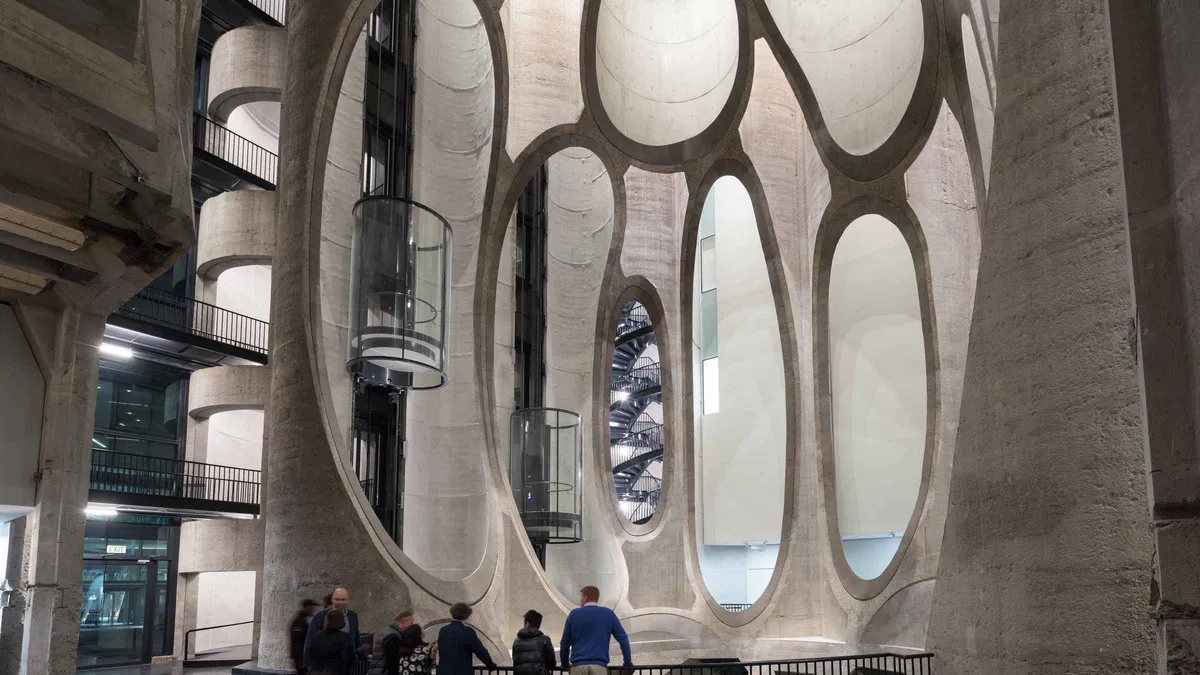
Museum of Contemporary African Art: Fast-Track Zeitz MOCAA
Fast-track ticket to Africa's biggest contemporary-art museum in the converted grain silo, flexible on date until scanned. African citizens enter free on Wednesdays 10:00-13:00 — this ticket is for everyone else.
Check Availability from $31.15
Cape Town: Nathi Langa Township Walking Tour
2.5-hour walk through Langa, Cape Town's oldest township, led by a resident guide in English or Xhosa — the cheapest and most direct township option, but you get yourself there and back.
Check Availability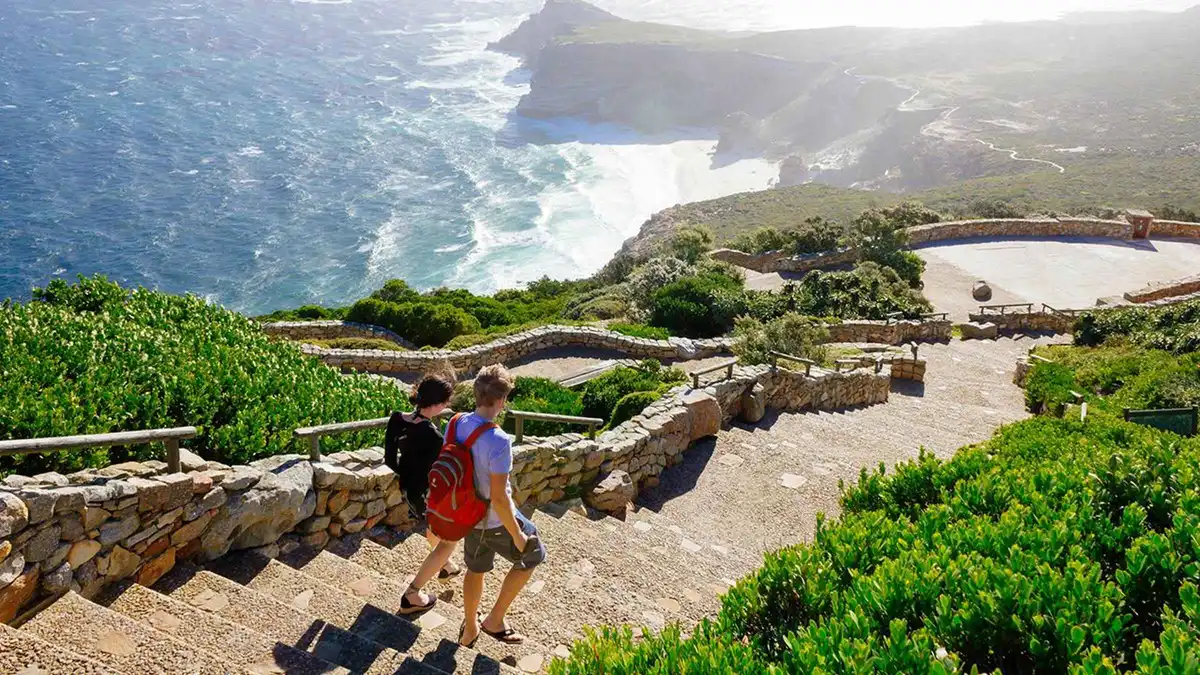 from $31
From Cape Town: Cape Point and Boulders Beach Full-Day Tour
Coach-based Cape Point day from $31 in a double-decker with Wi-Fi. Check which option you pick: only the dearer one includes the R515 reserve fee, and Boulders entry plus funicular stay pay-on-the-day.
Check Availability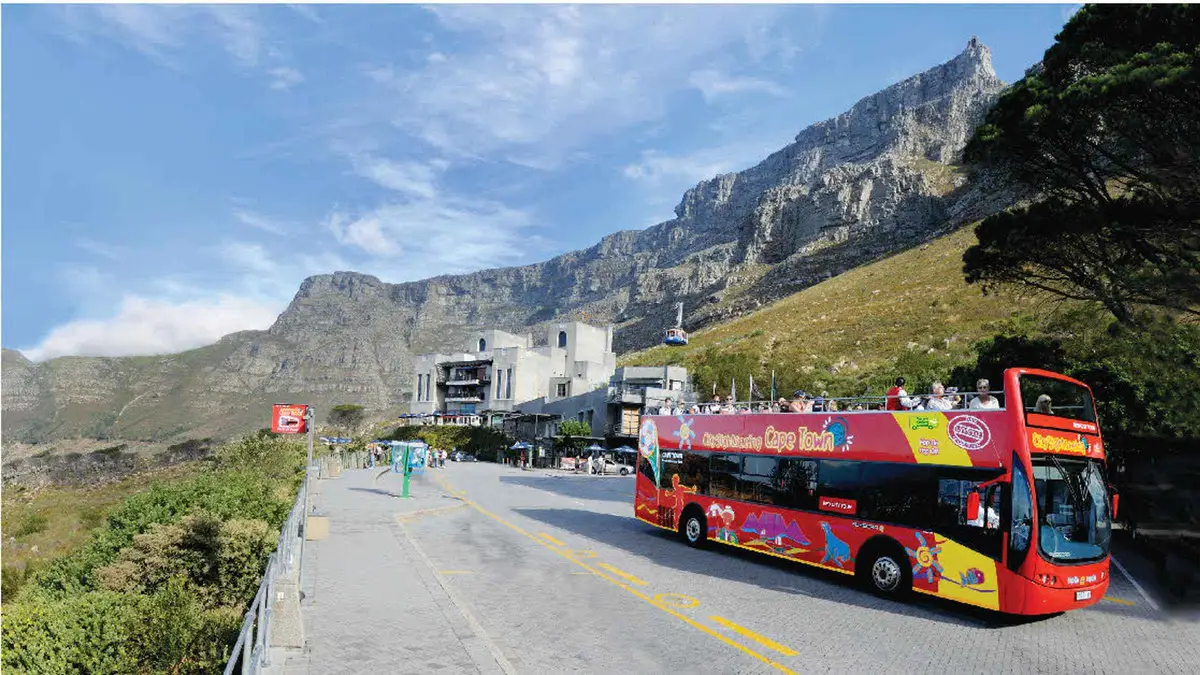 from $33
Cape Town: Hop-On Hop-Off Bus Tour with Optional Cruise
48 hours of open-top bus across the city routes with commentary in 15 languages, onboard Wi-Fi and a free walking tour. It moves you between sights — their entry fees stay separate.
Check Availability from $44.86
Cape Town: Lion's Head or Table Mountain Guided Hike
One booking, four routes: Lion's Head at sunrise or sunset, or Table Mountain via Platteklip Gorge or India Venster, 2.5-3.5 hours with a first-aid-qualified guide and headlamps. Cable car descent not included.
Check AvailabilityPrices, ratings and details are the platform's own. Dollar figures are the listed prices. The platform bills in your account's currency.
The Pages Behind These Numbers
Every ticket, compared
Official price beside the platform price for each attraction that charges one: the Cape Town tickets index.
The sourced half of the budgetThe free layer
The promenade, the hikes, the beaches and the commemorative-day museums, routed into real days: free things to do.
The backpacker columnThe bed, honestly
Why we publish no room figure here, and what each area trades: where to stay in Cape Town. Or start at Cape Town attractions.
The seasonal variableCape Town Costs: Questions
How much does a trip to Cape Town cost per day?
On the ground, excluding the bed: about $24.90 (R400) a day on a backpacker pattern, around $78.60 (R1,265) for a realistic mid-range day with one big ticket, and about $137.30 (R2,210) in comfort — the budget table shows every line and its source. Flights and accommodation are the variables that dwarf all of it.
Is Cape Town expensive for tourists?
No — for dollar, euro or pound earners it is one of the cheapest world-class cities anywhere: a top mid-range main course runs $9.32–$17.40 (R150–280, our estimate) and the biggest ticket in town is $37.30 (R600). The expensive parts are the flight and the big day trips, which is why the splurge list is where budgets are decided.
Why do attractions charge foreigners more than South Africans?
It is official policy at state sites — subsidised access for citizens, full rate for visitors — printed openly on the boards: Cape Point is $32.00 (R515) international against R110 South African, Boulders $15.22 (R245) against R55. The dual-pricing table lists every gate so no board surprises you.
How much do you tip in Cape Town?
10–15% at restaurants (10% is standard; a 10% service charge is often auto-added for tables of six or more, so read the bill), coins for car guards and petrol attendants, R5–10 a bag for porters. It all works through the card machine except the coins — see the tipping section.
Should I use cash or card in Cape Town?
Card, almost everywhere — Kirstenbosch and the SANParks gates literally cannot take cash, and tap-to-pay is universal in restaurants and shops. Keep about R200–300 in small notes and coins for tips, use bank-attached ATMs, and always decline the machine's offer to charge you in your home currency. See card-first.
How does the VAT refund work when leaving South Africa?
15% VAT on physical goods — never on hotels, meals or tours — refunded through SARS' scheme: original tax invoices, R250 minimum, goods exported within 90 days and shown with the invoices at the airport VAT office before check-in. Cape Town International has one of the country's three offices. The VAT section has the worked example.
How much spending money do I need for a week in Cape Town?
Excluding accommodation, roughly $550–950 (R8,900–15,300) per person covers a strong mid-range week: five city days near the $79 mid band plus two big day trips at $50–220 each with their gate fees. Add the bed from where to stay and you have the honest total.
How much is a coffee in Cape Town?
About $2.17–$2.80 (R35–45) for a flat white in the City Bowl or Sea Point — our estimate from current menus, because no authority publishes café prices. That is a third to a half of what the same cup costs in London or New York, and it is the number that sets the tone for everything else here. Where to eat covers the cafés and the districts they sit in; the line-by-line list separates our estimates from the official prices.
How much is a beer in Cape Town?
A local craft beer runs about $2.50–$3.50 (R40–56) in a bar or restaurant, again our estimate rather than a published figure. Wine is the better bargain: a bottle from an estate you can see from the table often costs less in a Cape Town restaurant than a mediocre import would at home. The TAP Bar at the Lower Cableway Station carries the full Newlands Brewery range, and where to eat maps the drinking streets.
How much is a museum ticket in Cape Town?
$6.21 (R100) flat for an international adult at any of the seven Iziko museums — the SA Museum, the National Gallery, the Slave Lodge and four more — under a single tariff effective 1 April 2026. The Castle of Good Hope is cheaper still at $3.11 (R50), and Zeitz MOCAA is the expensive one at $16.46 (R265) with under-18s free. The tickets page prints every gate price in the city.
Cape Town Budgets, Tested On Camera
Three clips that put real receipts against this page's arithmetic — a full budget breakdown, a $50 stress test, and a local pricing a visitor's day.
How Much Does a Cape Town Vacation Really Cost? (2026 Travel Budget Guide)
A full trip budget itemised — the closest video equivalent of our daily-bands table.
Video: DJAVU G WORLDWIDEWhat Can $50 Get in Cape Town?
Fifty dollars spent on camera — a live test of the exchange-rate arithmetic this page runs.
Video: The $10 Travel ShowTop 7 Things to Do in Cape Town — Prices Included
A South African creator pricing the headline attractions, useful for hearing the local rate culture first-hand.
Video: Terry MokgaetseVideos load from YouTube only when you press play.
Prices, hours and terms are set by the venue or operator and confirmed at checkout.
We may earn a commission if you book through one of our links, at no extra cost to you. Full affiliate disclosure